


[Christ Pantocrator -- St. Catherine's Monastery, Sinai]
During an interview, Peter Seewald once asked Joseph Cardinal Ratzinger a pointed question: How many ways are there to God? Seewalt, a lapsed Catholic, was perhaps hoping to catch the author of the "infamous" document Dominus Iesus--which reaffirms Jesus Christ as the only source of salvation--in a "gotcha" moment of intolerance and rigidity.
But the Cardinal surprised him. "As many as there are
 people," he replied. "For even within the same faith each man's way is an entirely personal one."1 Though Ratzinger also made clear that the only way to God is through Christ, it was his focus on each man's encounter with the Way that discombobulated the jaded journalist. That same disarming blend of the orthodox and the individual is evident in Ratzinger/Benedict XVI's latest book, Jesus of Nazareth
 , which the author describes not as an "exercise of the Magisterium" but an "expression of [his] personal search 'for the face of the Lord.'"2
The Historical-Critical Method
The Holy Father's salutary distinction between his office and his opinions does not mean that Jesus of Nazareth has little to do with the teachings of the Church. One of the book's central aims is to rectify that form of biblical exegesis known as historical criticism. Begun in the eighteenth century as an
enlightenment attempt to strip revealed religion of its claims to the supernatural and the miraculous, historical criticism now dominates biblical studies both Catholic and Protestant and shows no sign of abating, despite the rise of other schools of interpretation such as literary criticism.
Though Ratzinger also made clear that the only way to God is through Christ, it was his focus on each man's encounter with the Way that discombobulated the jaded journalist.
* * * * * * *
As its ideological beginnings make clear, historical criticism is a mixed blessing for Christianity. On the one hand, it was designed to undermine the believer's confidence in the reliability of the sacred text, and consequently it has destroyed not only many a man's orthodox convictions but his entire faith. For contemporary examples of this one need only think of the twaddle advanced by the "Jesus Seminar" or the articles gracing the covers of Time and Newsweek every Easter that deny the Resurrection on the authority of renowned biblical "experts."
On the other hand, it is thanks to the methodology of modern biblical studies that we have made enormous strides in understanding our biblical manuscripts, in our grasp of the original languages, andin our knowledge of Scripture's historical and cultural context. At its best, historical criticism helps exegetes better understand the literal sense of the text.
Benedict makes clear in his preface that he is aware of historical criticism's "indispensable dimension" as well as its significant "limits" (xv, xvi). Undergirding the conflict between historical-critical studies and Christian orthodoxy, however, is a deeper issue: who is the ultimage interpreter of the Bible--the Church, with its rule of faith, or the Academy, with its own canons of judgment? One of the most chilling passages in Jesus of Nazareth is Benedict's reflections on a short story by Vladimir Soloviev in which the Antichrist comes as a renowned Scripture scholar who believes that one should "measure the Bible against the so-called modern worldview" (35):
The Antichrist, with an air of scholarly excellence, tells us that any exegesis that reads the Bible from the perspective of faith in the living God, in order to listen to what God has to say, is fundamentalism; he wants to convince us that only his kind of exegesis, the supposedly pure scientific kind, in which God says nothing and has nothing to say, is able to keep abreast of the times (36).
It is no doubt statements like this that led Cardinal Renato Martino to say that Jesus of Nazareth is not only a book with "salt and pepper" but with "hot peppers."3
Most of the controversy generated by Jesus of Nazareth so far has been not over any of Benedict's interpretations of this or that passage but his underlying conviction that the Church is in a beter position to understand its own sacred texts than the Academy.
* * * * * * *
For Benedict, only eyes fortified by Faith, Hope, and Charity can truly see the living mysteries disclosed in the Scriptures.4 While historical criticism can be useful, it must be firmly subordinated to the Apostolic Faith (xxiii), and it must remain cognizant of the fact that its own reconstructions of the past are hypothetical and hence tentative (xix). Most of the controversy generated by Jesus of Nazareth so far has been not over any of Benedict's interpretations of this or that passage but his underlying conviction that the Church is in a beter position to understand its own sacred texts than the Academy. That this should come as a surprise or a scandal to anyone indicates the extent of the crisis we are in and why the Pope is wise to address it.

[Saint Jerome from a mural]
On the whole, however, Benedict's own approach is more constructive than critical. His Holiness highlights the auspicious "fact that the inner nature of the [historical-critical] method points beyond itself" (xviii). Just as modern science, when it is understood properly, points to the need for a science or scientia greater than itself, so too does historical criticism implicitly (and perhaps unwittingly) reveal the possibility that every word in the Scriptures "contains more than the author may have been immediately aware of at the time" (xix).
A Master Exegete
Hence, there will always be a need to examine what the Church Fathers called the sensus plenior, the fuller Christological meaning of both Testaments made present through the inspiration of the Holy Spirit. To hold this involves no blind appeal to authority or voluntaristic suspension of discernment. On the contrary, Pope Benedict masterfully demonstrates that the most rational and reasonable way to read the Scriptures is with the recognition that the so-called "Jesus of history" is the "Christ of faith" (xxii), that the dichotomy between the two created by many exegetes invariably butchers the very text they purport ot understand and thus undercuts their own claims to competency. Two examples will suffice to illustrate this point.
In his chapter on the Baptism in the Jordan, Benedict takes advantage of the spectacular discovery of the Qumran or "Dead Sea" scrolls in the 1940s, reflecting on the possible connections between the desert Essenes (an ascetical, quasi-monastic Jewish community) and Saint John the Baptist. But while many scholars tend to reduce John's ministry to that of the Essences, Benedict, looking at the same data, more convincingly argues that in light of what we know from Qumran, "the Baptist's appearance on the scene was something completely new; the baptism he enjoined is different fromthe usual religious ablutions" (14). The Essenes had frequent ritual washings to be sure, but these stand in contrast to the unrepeatable act by the Baptist that is "meant to be the concrete enactment of a conversion that gives the whole of life a new direction forever" (ibid.). Like any good Catholic missionary, John was taking preexisting symbols and transforming their use and meaning to betoken a new and divine reality.
Second, in his chapter on the Gospel of Saint John, Benedict reviews the commonplace contention that while the other three Gospels are more or less historical, John's Gospel is a much later product of theological speculation and hence does not reflect the "real" Jesus. Yet as Benedict points out, this conjecture presupposes that theological reflection is a hindrance rather than an aid to knowing who this Man is, and this is absurd: if Christ is who He says He is, the only way to know him is through faith. Ultimately undergirding the "historical Jesus" obsession is a remarkably naive understanding of history as something that can be captured in a series of transcripts. But as John himself points out in his Gospel through his use of the conceept of memory, "remembering" the story of the Christ can only happen through an awakening of the Spirit that makes the data of the past intelligible (231-34). Benedict's careful exploration of the biblical author's self-understanding provides a key to unlocking the text that modern exegetes have been trying in vain to pick.
Genuine Dialogue
It is no coincidence that Jesus of Nazareth is itself an excellent example of how historical criticism, purified of its pretensions to high science and rightly reordered, can bear much fruit. But the book, which covers the earthly ministry of Our Lord from His baptism to His transfiguration (a second volume on the infancy narratives and the Passion is forthcoming), boldly engages a number of other controversies as well.
 Perhaps the most fascinating example of this is the Pope's response to Rabbi Jacob Neusner, whom Benedict calls a "great Jewish scholar" (69) and a "truly attentive listner" (118). Neusner is the author of the 1994 book A Rabbi Talks With Jesus (reprinted 2000), in which he imagines himself in the crowd listening to Jesus' Sermon on the Mount. As Benedict summarizes:
He listens to Jesus... and he speaks with Jesus himself. He is touched by the greatness and the purity of what is said, and yet at the same time he is troubled by the ultimate incompatibility that he finds at the heart of the Sermon on the Mount.... Again and again he talks with Him. But in the end, he decides not to follow Jesus. He remains--as he himself puts it--withthe 'eternal Israel'" (103-4).Neusner, a distinguished professor of Judaism at Bard College, was unimpressed with the "Judeo-Christian dialogue [that] served as the medium of a politics of social conciliation" rather than a "religious inquiry into the convictions of the other."5 He lamented the post-WWII "conviction that the two religions say the same thing" and the Enlightenment "indifference to the truth-claims of religion."6 In other words, he was tired of the very same things that make a traditional Catholic bristle when he hears the words "interreligious dialogue."
Neusner's response was A Rabbi Talks with Jesus, in which he takes with the utmost seriousness and respoect the teachings of Jesus even though he ultimately cannot accept them. Why not? Because "the Torah was and is perfect and beyond improvement,"7 whereas Jesus, with His frequent "You have heart it said... But I say unto you" emendations, is clearly going beyond the Torah and hence daring to improve it. Neusner rightly recognizes that with these statements Jesus is claiming to be God, and this astonishing assertion is something to which he cannot assent.
Rabbi Neusner later said of his book that he wanted to explain to Christians why he believed in Judaism, and that this explanation "ought to help Christians identify the critical convictions that bring them to church every Sunday."8 It certainly did for one reader. Benedict writes: "More than other interpretations known to me, this respectful and frank dispute between a believing Jew and Jesus, the son of Abraham, has opened my eyes to the greatness of Jesus' words and to the choice that the Gospel places before us" (69).
This is interreligious dialogue at its very best, the kind of serious conversation reminiscent of Saint Thomas Aquinas' turn to Rabbi Moses Maimonedes, where respect for the other does not devalue respect for the truth.
* * * * * * *
In what is the longest treatment of any living author in Jesus of Nazareth, the Pope joins "in the rabbi's conversation with Jesus" (70). He argues that Neusner is absolutely right in his analysis of what Jesus is saying, but he contends that this does not constitute a violation of the Torah. On the contrary, drawing from the testimony of the Hebrew Bible the Pope argues that the Torah points beyond itself, beyond the borders of Israel, that God's "one great definitive promise to Israel and the world" was the "gift of universality" which is made possible by the God-man who comes to save both Jew and Gentile (116).
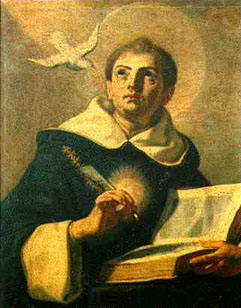
This is interreligious dialogue at its very best, the kind of serious conversation reminiscent of Saint Thomas Aquinas' turn to Rabbi Moses Maimonedes, where respect for the other does not devalue respect for the truth. Neusner himself was amazed that the Pope should honor him in this way. In responding to Jesus of Nazareth, the rabbi wrote, "Someone once called me the most contentious person he had ever known. Now I have met my match. Pope Benedict XVI is another truth-seeker. We are in for interesting times."9
Theological Wisdom
To dwell as I have done on the Holy Father's disputations with contemporary issues such as biblical criticism and Judeo-Christian dialogue should not, however, obscure the more fundamental fact that Jesus of Nazareth is first and foremost a treasure of timeless theological wisdom. Benedict is a master reader of Holy Writ, a sleuth of the sacred who artfully connects seeminly disparate scriptural passages or Patristic interpretations to reveal a deep and rich teaching. No matter how well you think you know the Bible, the Pope will surprise you.
For Benedict, only eyes fortified by Faith, Hope, and Charity can truly see the living mysteries disclosed in the Scriptures. While historical criticism can be useful, it must be firmly subordinated to the Apostolic Faith, and it must remain cognizant of the fact that its own reconstructions of the past are hypothetical and hence tentative.
* * * * * * *
To mention just two examples: Benedict's explanation of why Jesus deigned to be baptized is not that He wished to rid Himself of His guilt (for He obviously had none) but that He wished to "load the burden of all mankind's guilt upon his shoulders" (18). Like Jonah the prophert, Our Lord inaugurated His public ministry by being thrown into the sea so that others may live. Benedict notes that in Eastern icons depicting Christ's baptism, the river Jordan appears "as a liquid tomb," a Hades into which Christ descends and out of which He rises to be greeted by the Father and the Holy Spirit" (19).

Similarly, Benedict offers a powerful exegesis of the three temptations in the desert by framing this event with a difficult question: Why didn't Jesus turn stone into bread (if not to feed Himself then at least others) or take control of all nations in order to bring peace on earth? Indeed "What did Jesus actually bring, if not world peace, universal prosperity, and a better world?" (44). "The answer," Benedict continues, "is very simple: God. He has brought God. He has brought the God who formerly unveiled his countenance gradually, first to Abraham and then to Moses and the Prophets, and then in the Wisdom literature.... It is this God, the God of Abraham, Isaac, and Jacob, the true God, whom he has brought to the nations of the earth" 944).
As this answer suggests, the Pope is never far from the face of the Lord in his exegesis. Everything that Christ says, such as his preaching on the Kingdom of God (ch. 3) or His parables (ch. 7) brings us primarily, not to a doctrine, but to Himself. When Our Lord speaks of the Kingdom of God, for example, He is speaking about His own kingship, Himself. And when He tells the Parable of the Prodigal Son, He is indicating how He Himself is the "concrete realization of the father's" mercy towards the sinner (208).
I mentioned earlier that Peter Seewald was disarmed by Cardinal Ratzinger's answer about the ways of seeking god, and now I should add that that experience reignited his own search for the Lord and his return to the Church. Let us hope that the hot but nourishing peppers in Jesus of Nazareth will have the same effect on those of us whose love of the Lord has grown cool.
Notes
- Joseph Ratzinger, Salt of the Earth: The Church at the End of the Millennium: An Interview With Peter Seewald
- p. xxiii. Cf. Ps. 27:8. [back]
- "Cardinal: Pope's Book Goes Against Grain," Zenit.org, 22 July 2007. [back]
- Looking at the logical lapses of Rudolf Bultmann, for example, "we see how little protection the highly scientific approach can offer against fundamental mistakes" (220). [back]
- Ibid. [back]
- Ibid. [back]
- Ibid. [back]
- Ibid. [back]
- Ibid. [back]

(Palgrave Macmillan, 2005). The present review of Jesus of Nazareth by Pope Benedict XVI was originally published in Latin Mass: A Journal of Catholic Culture and Tradition (Winter 2008), pp. 34-37, and is reprinted here by permission of Latin Mass Magazine, 391 E. Virginia Terrace, Santa Paula, CA 93060.]


