Showing posts with label Motu Proprio. Show all posts

Sunday, February 24, 2008

Motus Magnus: An Analysis of Summorum Pontificum


by Michael Foley


July 7th is the traditional feast of Saints Cyril and Methodius, the missionaries who introduced a venacular liturgy to the Slavic Church. And now, July 7th may also be remembered as the day when Pope Benedict XVI reintroduced a Latin liturgy to the Roman Church.

The Motu Proprio Summorum Pontificum is finally here, set to take effect on the exquisitely appropriate feast of the Exaltation of the Holy Cross (September 14th). The Pope tells us in his accompanying letter to the Bishops that "the document is the fruit of much reflection ... and prayer," and it shows.

What Didn't Happen

Summorum, though, has not met all expectations. Contrary to earlier press reports, it does not contain a numerical figure (previously rumored to have been thirty) for how many are required to petition for a Tridentine Mass. This frees the document from unnecessary regimentation, which is reasonable for a Church whose parishes vary widely in size.

Nor, thank goodness, was there any change to the Good Friday prayer for the conversion of the Jewish people -- though at the time of this writing (mid-July) protestations from lobbyists like the ADL's Abe Foxman continue unabated. Needless to say, if the prayer ever served as an occasion of bigotry (which has never been proved), what is needed is not further tinkering but a deeper understanding of its meaning.

* * * * * * *
By making the traditional liturgy universally accessible, the Holy Father is affirming that the Mass of the Ages belongs to every Catholic, not just those with a particular spirituality or vocation.

* * * * * * *

Contrary to some hopes, Summorum did not create a personal prelature or apostolic administration along the lines of Opus Dei, one that would safeguard the classical liturgy from the harassment of hierarchs and liturgists. Yet what the Pope has given us is far greater, even if it means having to endure some of the same difficulties as before. By making the traditional liturgy universally accessible, the Holy Father is affirming that the Mass of the Ages belongs to every Catholic, not just those with a particular spirituality or vocation. It lies at the center of the Catholic patrimony, not ina carefully sequestered ghetto for a few eccentrics and malcontents.

Further, thought the 1962 Missal is now universally available, no mention is made of a universal indult. This is a subtle yet tremendous change in language. In Church parlance an indult denotes permission to do something not allowed by the common law. It is thus an exception to the rule, an exception that, int he case of Pope John Paul II's 1988 Ecclesia Dei indult, was conceded begrudgingly. By speaking instead of two forms of the same rite, one extraordinary (the 1962 Missal) and the other ordinary (1970), Benedict has redrawn the map. No longer is the old Mass an exception to the rule; it is an established part of it. True, it will be a less frequently occurring form of Catholic worship, but there is a significant legal and even psychological difference between more frequent and less frequent on the one hand and a rule and its exception on the other. And as one blogger wryly remarked, "Let's hope that the term 'extraordinary' when referring to the 1962 Missal will be as broadly applied as it is when referring to 'extraordinary ministers of Holy Communion'!"

Power to the People

Another way in which Summorum redraws the map is by locating the initiative with the faithful and requiring the pastor and Bishop to address their needs (Article 5, para. 1). As Cardinal Dario Castrillon Hoyos explained, "If a group ... having a priest available to do it, asks to celebrate this Mass, the pastor or rector of the church cannot oppose it."1 Indeed, the entire trajectory of Summorum is from the ground up: the faithful petition their pastor, and if he cannot accommodate them, they are to appeal to the Bishop; if the Bishop does not help, the matter should be referred to an expanded Ecclesia Dei Pontifical Commission (5 para. 1, 7). In a twist that some might consider ironic, Summorum performatively reaffirms Vatican II's teaching on not only the clergy but the laity as the people of God.

Vindictated

Summorum also offers a robust vindication of the legitimate aspirations and claims that traditional Catholics have been making for decades. The Pope gently reminds the Bishops that it was their own failure to implement Pope John Paul II's indult that led to the Motu Proprio, and he laments the liturgical "deformations" that betrayed the aims of Vatican II and caused great suffering among the faithful -- including, he adds in a touching personal note, himself.2 His Holiness also rejects the old canard that attachment to the classical liturgy is geriatric nostalgia by speaking of all the young who have been drawn to it, and he accords greater intellectual respect to traditionalists by mentioning those whose attachments have been "formed by the liturgical movement," that is, by study and prayer rather than mindless habit or mere allergy to the new."3

* * * * * * *
The Pope gently reminds the Bishops that it was their own failure to implement Pope John Paul II's indult that led to the Motu Proprio, and he laments the liturgical "deformations" that betrayed the aims of Vatican II and caused great suffering among the faithful -- including, he adds in a touching personal note, himself.

* * * * * * *

Most significantly, Summorum explicitly states that the 1962 Missal was "never abrogated" (Article 1).4 A special group of Cardinals studying the issue in 1986 arrived at the same conclusion, but their report was gagged by protests from several national Bishops' conferences. For the past few years Cardinals Estevez and Castrillon Hoyos have reasserted the group's findings, but they were politely ignored. No more.

The Holy Father, however, is not blind to the vices that plague some traditionalists, who might be prone to "exaggerations and [unsavory] social aspects."5 Yet even here Benedict tells his Bishops that the best way to help them is by responding with charity. Put differently, if you want people to stop acting like freaks and fanatics, stop treating them like freaks and fanatics.

Restrictions

Summorum does not provide a carte blanche for the 1962 Missal. The group petitioning for the old Mass must be "stable" (5 para. 1), or as the Latin puts it, coetus ... qui continenter existit: "a group that exists consistently."6 Ordination is the only Sacrament not mentioned as one that can be conferred according to the old usage, but no matter: the traditional seminaries will be able to continue their current practices, as Summorum is primarily addressing parish life. The priest must be capable of celebrating the classical form and be juridically unimpeded (5 para. 4), and he can privately celebrate the Mass every day of the year except during the Sacred Triduum --- a reasonable restriction, since this is the practice for all private Masses on those days (and note that it does not forbid public Tridentine services during the Triduum).

Though the priest is obliged to accommodate the requests of the faithful for a traditional Mass, he must harmonize their welfare with the rest of the parish's (5 para. 1). No doubt the desire for peaceful harmony also prompted the limitation of the only one Tridentine Mass on Sundays and feast days (5 para. 2). Since Summorum is principally concerned with the Sunday celebrations that will be created by it, this should except churches that currently have more than one Sunday Tridentine Mass.7

All of these things are to be carried out "under the guidance of the Bishop in accordance with Canon 392" (5 para. 1). The Pope is quick to stress that his decision in no way undermines the Bishop's authority: though the rules of the game may have changed, the Bishop remains its referee.8 Given the intrinsic nature of episcopal orders, this is as it should be. And it is significant that His Holiness contextualizes this guidance in terms of Canon 392, which does not elucidate a Bishop's right to curtail liturgies but his duty to protect them for abuse. Bishops, in other words, are being instructed to promote a proper observace of the 1962 Missal in the dioceses.

No Rupture

One of the reasons Pope Benedict define the 1962 and 1970 Missals as two forms of the same rie is to underscore that there has been no "rupture" in the Church's liturgy. This, of course, might sound like an inaccurate claim, for do not the many novelties in the 1970 Missal mark a sharp departure from the Church's tradition of organicliturgical development?

* * * * * * *
As is clear from his writings as cardinal, the Holy Father is aware that not everything in the Novus Ordo is the fruit of organic development, but also needs a viable framework in which the new Missal can
be evaluated dispassionately.


* * * * * * *


As is clear from his writings as cardinal, the Holy Father is aware that not everything in the Novus Ordo is the fruit of organic development, but also needs a viable framework in which the new Missal can be evaluated dispassionately. By speaking of a single rite with two forms, Benedict is advancing what he elsewhere calls a "hermeneutic of continuity," an interpretation of vatican II and its aftermath in light of the great tradition rather than vice versa. In the long run, this approach will do much good in restoring the very continuity that has been breached by the distorted beliefs and practices rampant today.

Article 6

The most potentially problematic clause of Summorum is Article 6, which states that at a Tridentine Mass "the readings may be given in the vernacular, using editions recognized by the Apostolic See."

At the time of this writing, it remains unclear as to whether this refers simply to duly approved translations of the 1962 readings or to the use of the 1970 new Lectionary. The Ecclesia Dei commission has apparently authorized the latter in the past, so Article 6 could be referring to this as well.9 Such is the interpratation that the United States Conference of Catholic Bishops (USCCB) has given10 (see inset on page 19).

It would certainly be strange if this were the article's meaning, especially in light of the Vatican's own understanding of the 1962 Missal. The day the Motu Proprio was released, the Holy See Press Office issued a statement explaining the extraordinary form of the Roman rite to the media. One of the things the explanatory note states is that the 'form' is a 'complete' Missal in the Latin language, that is, it also contains readings for the celbrations (that is it is not disctinct from the 'Lectionary' as the later 1970 Missal is).

Is it then the Church's intention to allow a break int he very integrity it acknowledges? Grafting onto the old Missal the new Lectionary, which is based on a completely different set of organized principles and is incongruous with the collects and other propers of the 1962 calendar, would constitute precisely the kind of contrived dallying that Pope Benedict so eloquently rejected as a cardinal. And it saddles the extraordinary form with the Notoriously poor English. translations currently difiguring the 1970 Missal. Clearly the matter requires greater clarification from Ecclesia Dei.

Nevertheless, even if Article 6 should permit the new Lectionary, the good news is that it will probably not have much impact. Ecclesia Dei, as we have just noted, has been offering this same option for years, and it has never, to my knowledge, been acted upon. Moreover, since the entire trajectory of Summorum is from the ground up, the initiative for such a move would remain with the faithful themselves. And I am fairly confident that traditionalists will use this option for their Masses as much as progressive priests use the now optional maniple for theirs.

What Article 6 clearly does allow, however, is the biblical readings from the 1962 Missal to be proclaimed in the vernacular instead of Latin. This, too, is not unprecedented (Ecclesia Dei has always allowed this), nor does it necessarily constitute a disregard for ritual purity. Indeed, the late Michael Davies (if only he had lived to see this day!) spoke favorably of this possibility.11 My own sense is that many traditionalists, having been scarred by one too many liturgical deformations, will be loathe to adopt this practice and that it might be prudent to defer the issue; either way, charity should prevail in determining the best local course of action.

Authentic Development

One change that all parties can welcome, however, is the statement that "new Saints and some of the new Prefaces can and should be inserted in the old Missal."12 This is not a recipe for reckless alteration but for careful and authentic development, especially since it is to be carried out in cooperation with traditional bodies like the Priestly Fraternity of Saint Peter and the Institute of Christ the King.13 Until now, one could not celebrate in the traditional form the feast of Saint Padre Pio (a bitter irony given the Saint's love for the old Mass), of Saint Thomas More (which was not on the universal calendar in 1962), of Saint Faustina, or of the many other saints recently canonized. Similarly, it is not unreasonable to add prefaces to the 1570/1962 Missal, which has fewer than its medieval predecessors. In the 1962 Missal, for example, there is no proper preface for Advent, and thus the generic Common Preface or the Preface of the Holy Trinity is used from June all the way up to Christmas Eve.

* * * * * * *
Until now, one could not celebrate in the traditional form the feast of Saint Padre Pio (a bitter irony given the Saint's love for the old Mass)

* * * * * * *

But the deeper significance to this move is that the classical form is finally "unfrozen." As long as the Tridentine Missal was petrified in the year 1962, it could be seen as a museum piece, something as beautiful but as lifeless as a butterfly in amber -- and something that could be quietly put back into storage once this whole traditionalist brouhaha faded. But now, the traditional Missal will yet again reflect the ever growing roster of God's saints; it will yet again be capable of an authentic development that adds to rather than subtracts from its richness. Though seeminly minor, these proposals decisively ensure the ancient form's dynamic and ongoing vitality.

Conclusion

Because Summorum Pontificum does not and cannot provide a panacea for the current liturgical crisis, the dark night of abuse is far from over and the progress will remain slow. If experience is any guide, papal documents do not so much make things happen as set the conditions for making them happen. The onus, then, is on the grass-roots level, with the priests and faithful.

Finally, we should not forget Pope Benedict XVI. It was hiis vision and his determination in the face of stultifying opposition that made this outstanding document possible; and for this gift to the Church he now faces an escalating wave of hostility from enemies within and without. Let us fervently pray for our Supreme Pontiff and gladly heed his call for boundless charity as we work towards that "inner reconciliation in the heart of the Church" animating his liturgical largesse.


Notes

  1. From an interview in the Intalian magazine 30 Giorni, translated and cited by Catholic News Service. Emphasis mine. [back]

  2. Cf. the Pope's "Letter to the Bishops on the Occasion of the Publication of the Apostolic Letter 'Motu Proprio Data' Summorum Pontificum," Vatican translation. The letter does not contain official paragraph numbers, and so I am unable to cite it more precisely. [back]

  3. Ibid. [back]

  4. The Holy Father repeats this in the letter as well. [back]

  5. Letter. [back]

  6. With the exception of my literal rendering here of the Latin, all citations of Summorum are taken from the unofficial English translation of the Vatican Information Services. [back]

  7. Similarly, it should exempt "personal parishes" such as those run by the FSSP (1). The matter, however, may require greater clarification from Ecclesia Dei. [back]

  8. Cf. the letter. [back]

  9. Cf. Michael Davies, "The Missal of 1962: A Rock of Stability," TLM 10:2 (Spring 2001), 12. [back]

  10. USCCB Newsletter, Vol. XLIII (June-July 2007), q. 12, p. 24. [back]

  11. Unfortunately I cannot locate the passage. As attested by Alcuin Reid's amazon.com book reviews, both Monsignor Klaus Gamber in his Reform of the Roman Liturgy and Aidan Nichols in his Looking at the Liturgy "accept the appropriateness of vernacular readings." The Ordinances of the Society of Saint Pius X, signed by Archbishop Lefebvre, purportedly permit readings exclusively in the vernacular, and at least one SSPX priest, Fr. Basil Wrighton, speaks of the practice as "reasonable" (cf. "Roman Protestants," Angelus, August 1982). [back]

  12. Letter. [back]

  13. Ibid. [back]

[Dr. Michael P. Foley is a professor of Patristics at Baylor University and the author of Why Do Catholics Eat Fish on Friday? The Catholic Origin to Just About Everything (Palgrave Macmillan, 2005). The present article, "Motus Magnus: An Analysis of Summorum Pontificum," was originally published in Latin Mass: A Journal of Catholic Culture and Tradition (Advent/Christmas 2007), pp. 32-34, and is reprinted here by permission of Latin Mass Magazine, 391 E. Virginia Terrace, Santa Paula, CA 93060.]

Saturday, February 23, 2008

Grazie, Benedetto XVI

by Alice von Hildebrand


The date of July 7th, 2007 will be remembered with gratitude by all those who treasure the Traditional Mass. Not only is it likely that the Motu Proprio Summorum Pontificum will bring back into the fold many who have been rightly distressed and grieved by the shocking abuses which have taken place in the Sacred Liturgy since Vatican II (e.g. "Halloween" Masses), but also because it contains treasures of spirituality which have been buried. In spite of the fact that the "Tridentine" Mass never was, and could not be abrogated, some bishops, in the early 1970s, declared that those attending the "old" Mass on Sunday were not fulfilling their Sunday obligation.

When in January 1980, I had the priviledge of having a private audience with John Paul II, I drew this fact to his attention, and mentioned that, shortly before his death, my husband said to me, "I believe that to prohibit a holy traidition is morally illegitimate." John Paul was silent for a moment and then said, "Your husband is definitely one of the very great ethical thinkers of the twentieth century." Later, the Holy Father granted an indult to priests wishing to celebrate in the "old" rite, but permission had to be obtained from the local bishop. In spite of the pope's explicit request that bishops be "generous" in granting this request, many of them were deaf to his plea. Nevertheless, the sacred Tridentine Mass refused to die.

Cardinal Ratzinger, whose magnificent book on the liturgy, testifies to his profound understanding of its importance for man's religious life, clearly indicated that he regretted some of the changes that had taken place since 1969, many of which could not claim to be requested by Vatican II.

As head of the Congregation of the Faith, Cardinal Ratzinger became aware that the de facto prohibition of the "Tridentine" Mass had nefarious effects. When I was once again granted the incredible privilege of having a private audience iwth another pope, Benedict XVI, I repeated to him what I had said to John Paul II twenty seven years earlier. He told me that the Motu Proprio would be released in May 2007. (Apparently problems of translation delayed somewhat this ardently awaited proclamation.)

His Holiness was clearly aware that the legitimate wishes of innumerable faithful had been totally disregarded. He also knew that the congregations faithful to the "old" rite were flourishing, whereas many religious orders and seminaries had great difficulties recruiting young men for the priesthood.

Let us mention one parish whose story deserves to be told. In the early nineties, Saint John Cantius in Chicago was a moribund parish; at best, some fifty parishioners showed up for Mass on Sundays. Clearly it seemed to be doomed. But one dedicated priest, Father Frank Phillips, offered to take charge of it. He first introduced the Novus Ordo in Latin, the traditional language of the Church. Then he re-introduced the traditional Mass. Almost miraculously, more and more parishioners attended Mass on Sundays. A couple of times, I was privileged to go to Saint John Cantius on a Sunday. There is a low Tridentine Mass at 7 AM, then 12 PM. To my joy I witnessed that the Church was packed with young couples with children. The Parish of Saint John Cantius has literally "risen from the dead." The Institute of Christ the King is enjoying a similar success; it now has a house in Africa, several in Europe, and six in the United States, with more int he wings. More and more young men are responding to a call to the priesthood. The [Priestly] Fraternity of Saint Peter also deserves to be mentioned.

* * * * * * *
The Tridentine Mass is uniquely God-centered and is a perfect formulation of our faith: lex orandi, lex credendi. It is bathed in sacredness and
young people long for it.


* * * * * * *

The question is: why is the "old" Mass attracting so many young people who are definitely not suffering from what some bishops call "a sentimental attachment to the past"? May I venture to answer? What is attracting them is that the Tridentine Mass is uniquely God-centered and is a perfect formulation of our faith: lex orandi, lex credendi. It is bathed in sacredness and young people long for it; they have been deprived of this blessed atmosphere since their youth. One feels the awesomeness of this form of worship: God's house is experienced as a locus terribilis. It is truly the "house of the Lord," where we should take off our sandals and adore. Moreover, its liturgy is rich in symbolisms so important in religious life. Many of these symbols ahve been eliminated in the Novus Ordo. In the Tridentine Mass, the priest begins Mass at the foot of the altar. The symbolism is clear: before ascending the steps leading to the altar (where the Divine Sacrifice will be offered), he has to purify himself by reciting the magnificent 42nd Psalm: Introibo ad altare Dei.

After this purification, he dares to ascend to the altar (now a table), facing east together with his whole congregation. Once again, the symbolism is luminous: Christ is the Sol Justitiae. (Malachy, 3-20). The sun rises from the East and it is proper and just that His people should therefore look up to the East. This is a long standing tradition which has been arbitrarily abolished. That this is regrettable has been clearly formulated in Cardinal Ratzinger's book: The Spirit of the Liturgy. He writes: "The common turning toward the East was not a 'celebration toward the wall'; it did not mean that the priest 'had his back to the people'; the priest himself was not regarded as so important. For just as the congregation in the synagogue looked together toward Jerusalem, so in the Christian liturgy the congregation looked together 'toward the Lord'" (p. 80).

The Holy Sacrifice of the Mass -- a non-bloody repetition of the Sacrifice of Christ on Calvary -- takes place on the altar, the traditional place where in the Old Testament sacrifices were offered to God, replaced and fulfilled in the New Testament by the One Sacrifice of the One and only True Priest: Christ.

Today, the priest faces the congregation. Not only has a deep symbolism been lost, but moreover, this fact can tempt some priests to assume that "they should be performing," and unwittingly attract attention to themselves. The Tridentine Mass is vertical in the deepest sense of this term: totally God-centered. The individual personality of the priest is totally inimportant. He is no acting in persona Christi.

Genuflecting has traditionally been viewed as a visible expression of adoration. It plays much less of a rule in the Novus Ordo, even though Josef Cardinal Ratzinger had written in the book just cited above "... bending the knee before the presence of the living God is something we cannot abandon." (The Spirit of the Liturgy, Ignatius, p. 191.) Moreover, for no legitimate reason, altar rails have been removed. (Unless I am mistaken, this was not ordered by Vatican II.) This was not only a costly venture, but it also prevented people from adopting a posture that many of us feel to be the only adequate "body language" when approaching the Eucharist. Now the faithful are supposed to receive their Lord and Savior standing.

* * * * * * *
Many repetitions in liturgical prayers have been abolished; they were viewed as "unnecessary." That repetitions have a
profound meaning is ignored.


* * * * * * *

Many repetitions in liturgical prayers have been abolished; they were viewed as "unnecessary." That repetitions have a profound meaning is ignored. Granted that repeating a piece of neutral information is meaningless and boring, words such as "Lord have mercy<' cannot be repeated often enough. A wife once complained to me that her husband never said to her that he loved her. In a roundabout way, I tried to make him understand that she would appreciate hearing these sweet words, to which he answered, "I told her so when I asked her to marry me. She therefore knowls it. Why should I repeat it?" He was missing the point. The key words in a deep human relationship are, "I love you," "Thank you" and "Forgive me." Marriages in which these wors are never uttered are doomed.

Prior to Vatican II, women entering church wore a veil, whereas men took off their hats. Feminists interpreted this as a clear sign of discrimination. Now women go bare-headed like men. By allowing this change, according to the feminists, the Church is "slowly" trying to correct her ill-treatment of the female sex. But once again, a profound symbolism has been eliminated. Not only are we now disregarding a recommendation of Saint Paul, but we no longer understand its deep meaning. Because Mary, the Woman par excellence, was privileged to carry the Savior of the world in her sacred womb, and sacredness calls for veiling, women wearing a veil were reminded that their bodies have the very same structure as the one of the Theotokos. Mary has given life to the Savior; women are also "mothers of life" and this implies a unique closeness between them and the One who is the Life of the world. To be veiled indicated clearly the sacredness of the female body, and once again, this sublime message has been lost.

That girls are now allowed to serve on the altar is a manifestation of the same tendency to confuse the role of men and women in Holy Church. Women, under the nefarious influence of feminism totally forget that receptivity is their special charisma (for Mary said: "... be it done to me ...") and an essential feature of religious life. In our secularized world, only "doing" is appreciated. Silence, receptivity, contemplation are "inefficient."

Another reason why the Traiditonal Mass has such a posserful attraction is that it incorporates what Plato calls: "the colden chord of tradition." In a society where marriage and the family are breaking down, in which innumerable people are "uprooted," in which the "deprivation syndrome" is endemic, the awareness of participating in religious celebration that goes back for centuries, that has been the spiritual food of innumerable, cherished saints, is a powerful incentive to "feeling at home," in a deeply spiritual sense. One feels embedded in the "Communion of Saints" and experiences that saints living centiries ago are our spiritual contemporaries. Our poor prayers are joined to those of beloved saints and carried by them to God. It is such a consolation to those of us who daily feel the imperfection of their praise of God. The Traditional Mass has a note of "eternal youth" (... qui laetificat juventutem meam ...); this is why it could not die.

There is no doubt that Pope Paul VI, whose deepest wish was to achieve reconcilication with Protestants during his pontificate, was, in modifying the liturgy, making a gesture of good will toward our "separated brothers" by replacing the altar by a table (the Eucharist is now viewed primarily as a meal), and thereby weakening the sacrificial dimension of the Mass.

My husband's nephew, Dieter Sattler was named German Ambassador at the Holy See in 1966 during Pope Paul's pontificate. He repeatedly invited my husband and myself to be his guests at the German embassy. This is why we had the privilege of being close to the Pope, when He proclaimed his "Credo."

* * * * * * *
Because Mary, the Woman par excellence, was privileged to carry the Savior of the world in her sacred womb, and sacredness calls for veiling, women wearing a veil were reminded that their bodies have the very same structure as the one of the Theotokos. Mary has given life to the Savior; women are also "mothers of life" and this implies a unique closeness between them and the One who is the Life of the world. To be veiled indicated clearly the sacredness of the female body, and once again,
this sublime message has been lost.


* * * * * * *

Dieter told us that one day, Paul VI had assembled the whole diplomatic corps in the Vatican and told them that reconciliation with the Protestants was a cherished aim of his Pontificate. For this reason, several Protestant periti were invited to assist at the debates concerning the liturgy. They were denied the right to vote, but we were told that the changes that were about to be introduced met with their approval. It is now rare that in Catholic parish bulletins the word "Mass" is used: it is usually replaced by "Eucharistic Celebration."

Another concern of traditional Catholics is that several prayers of the Tridentine Mass, have been omitted: mostly those mentioning the Blessed Virgin Mary (whom Protestants do not honor), and also intercessory prayers to the saints. To a Protestant, there should be no "intermediary" between God and the individual faithful.

The omission of several key symbols, the omission of several prayers has been wrongly interpreted by "ultra" traditionalists as invalidating the Holy Sacrifice. This was a most regrettable error that my husband rejected from the very beginning. But Pope Benedict XVI, in his loving concern for all his sheep, has now granted them (and all of us) the gift of a treasure that has been the liturgical glory of the Holy Roman Catholic Church for centuries. For this reason, we should pray a Te Deum, and all say in unison: Grazie, Benedetto XVI!

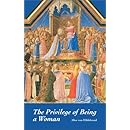
[Alice von Hildebrand, wife of famed philosopher Dietrich von Hildebrand, is an internationally known philosopher and author of numerous books, most recently The Privilege of Being a Woman. The present article, "Grazie, Benedetto XVI," was originally published in Latin Mass: A Journal of Catholic Culture and Tradition (Advent/Christmas 2007), pp. 32-34, and is reprinted here by permission of Latin Mass Magazine, 391 E. Virginia Terrace, Santa Paula, CA 93060.]

Saturday, October 20, 2007

Summorum Pontificum and the Future of the Liturgy


by Father Kenneth Baker

We had to wait a long time for the Motu Proprio, Summorum Pontificum, to be promulgated, but it was worth it. The document is well thought out and gives some precise juridical norms for the use of the traditional Latin liturgy of the Church. Over the next ten years this new legislation will have a profound effect on the worship of the Catholic Church.

A Motu Proprio is a special type of papal document which is the publication of a new law for the Church. This phrase means "on my own initiative" or something similar. This means it comes directly from the Pope who is the Supreme Pontiff and Vicar of Jesus Christ. It does not come from one of the Vatican Congregations run by a Cardinal. In this case the Motu Proprio is accompanied by a covering Letter explaining why the Pope is issuing the new legislation.

The first thing to note is that the letter is addressed to "My dear brother Bishops." The letter is not addressed to the whole Church; it is not the law of the Church. The law of the Church is contained in the Motu Proprio.

The Pope divides the letter into two parts, addressing two fears: the first is the fear expressed by the French and German Bishops -- that the document detracts from the authority of the Second Vatican Council. He rejects that outright: "this fear is unfounded." And he uses the same expression for the second fear: that the use of the Missal might lead to "disarray" and "divisions" among parish communities. That is also "unfounded."

He then introduces the two forms of the Roman rite, the ordinary and the extraordinary. He points out that it is not appropriate to speak of "two rites," but that it is rather a twofold use of one and the same Roman Rite -- there is one rite, with two equal forms. As you will see, this has very profound implications.

The Pope emphasizes that the ancient rite was never abrogated. In 1970, we were made to think that it was gone, and that only retired priests who had obtained special permission to say the Mass in private could say the traditional Latin Mass. That was a misrepresentation of the law of the Church, but it was almost universally adopted by the Bishops and religious communities.

* * * * * * *
The Pope emphasizes that the ancient rite was never abrogated. In 1970, we were made to think that it was gone, and that only retired priests who had obtained special permission to say the Mass in private could say the traditional Latin Mass. That was a misrepresentation of the law of the Church, but it was almost universally adopted by the Bishops and religious communities.

* * * * * * *
After making these points, the Pope goes into the deformations of recent years, and here he is very personal -- he uses the first person singular. He says, "I am speaking from experience, since I, too, lived through that period with all its hopes and its confusion. And I have seen how arbitrary deformations of the liturgy caused deep pain to individuals totally rooted in the faith of the Church." Here he is addressing the experience of all of us -- the hootenanny Masses, the clown Masses -- deformations which drove millions of people away from the Catholic Church.

Benedict next mentions Pope John Paul II, especially the Motu Proprio Ecclesia Dei (1988). In this document John Paul was trying to solve this problem for the people who had been alienated because they preferred the old liturgy. He wanted to assist these people, and, in particular, he also wanted to achieve reconciliation with the Society of Saint Pius X. But the document is only in general terms. It contains no "precise juridical norms."

In 1988 Pope John Paul II asked the Bishops to be generous in granting permission for the old Mass. Many, perhaps most, Bishops were not "generous" in allowing the traditional Latin Mass, so in this new document the Pope says in effect, "I have to step in and solve the problem with new juridical norms," and he does that with this Motu Proprio: it is the new law of the Church.

With this document, Benedict is taking control of the traditional Latin Mass out of the hands of the Bishops and giving it to priests. He's taking a giant step toward the Saint Pius X Society by granting their first demand that every priest be allowed to say the traditional Latin Mass. The "giant step" is that, in Article 2 of the Motu Proprio, Benedict says that every priest now has the right to say the traditional Latin Mass -- he doesn't have to ask the Pope, he doesn't have to ask his Bishop.

* * * * * * *
With this document, Benedict is taking control of the traditional Latin Mass out of the hands of the Bishops and
giving it to priests.


* * * * * * *
Remember that the second fear he mentioned was that the Motu Proprio would cause "disarray" and even "divisions" within the various communities. The Pope points out that there is only a small number of Catholics who are interested in the traditional Latin Mass at the present time, and so it is not likely to cause such divisions. He point out that neither liturgical formation or knowledge of the Latin language is found very often among priests -- and that is especially true here in the United States. So only a small percentage of the faithful -- to begin with -- are going to be interested in this. Frankly, the French and German Bishops should not be concerned about divisions in the Church over the Latin Mass, since eighty or ninety percent of the Catholics in these countries don't go to church anyway.

How can our priest learn how to celebrate the Latin Mass correctly according to the rubrics? Here is where the Priestly Fraternity of Saint Peter and the Institute of Christ the King come in, because they are in a position to train priests to celebrate the traditional Latin Mass. The Fraternity offered one week courses in June in the seminary in Denton, Nebraska, training diocesan priests who want to learn how to celebrate the traditional Mass. And they'll offer more in the future.1

The Pope underscores the fact that "the two forms of the Latin Mass can be mutually enriching." But some traditionalists are concerned that endless tinkering might occur by the constant addition of new saints and new prefaces. Yes, Popes have done that in the past, but with all the changes that been wrought in the past 40 years, why bring that up? What we're looking for here is stability -- we want the liturgy that is fixed and permanent. We don't want it changing every year.

With regard to the notion of the two forms as "mutually enriching," I think it's likely that the proper celebration of the traditional Mass on a wider scale in many parishes will bring about a more sacred celebration of the Novus Ordo Mass. After all, in the traditional rite, the priest is facing the east, he makes about fifteen genuflections, he uses very particular liturgical language -- and the Latin has the sacred character of mystery. All religions have sacred language -- for example, the Jews use Hebrew in the synagogue, even though it is not usually spoken. It brings home the message that there's mystery here. We are dealing with the supreme majesty of God almighty, and that language of mystery brings it all home -- we do not express it in the language of the street.

The Pope next states his basic reason for restoring the Latin mass: "I now come to the positive reason which motivated my decision to issue this Motu Proprio updating that of 1988. It is a matter of coming to an interior reconciliation in the heart of the church." That's essential to this whole thing -- the Pope wants to bring back reconciliation and unity in the Church; he wants to bring back the Saint Pius X Society, and he wants to bring back the millions of Catholics who don't go to church anymore.

* * * * * * *
With regard to the notion of the two forms as "mutually enriching," I think it's likely that the proper celebration of the traditional Mass on a wider scale in many parishes will bring about a more sacred celebration of the Novus Ordo Mass.


* * * * * * *
In recent months there have been many reports of opposition from mostly liberal individuals in the Church. Since the Latin Mass affects only about 1% of Catholics, why are they so opposed? They're afraid it's going to grow. Once people see the traditional Latin Mass and contrast it with the Novus Ordo, they realize what's been lost. The sense of the sacred, the mystery of the Mass, the Latin, the facing east, the Gregorian chants, altar boys, communion on the tongue, kneeling at the communion rail, all of those things.

I like the passage where the Pope assures the Bishops that the new legislation does not lessen the authority of the Bishop, after he has taken all of this away from the Bishop. He says to the Bishops, "in conclusion, dear brothers, I very much wish to stress that these new norms do not in any way lessen your own authority and responsibility, either for the liturgy or for the pastoral care of your faithful." So the Bishop's job is to oversee and implement the pastoral care of the faithful in the liturgy. And in the next paragraph, he repeats it -- their "role remains that of being watchful that all is done in peace and serenity." I love that, because what he's saying is, you no longer have absolute control over the traditional Latin Mass, but you have to see to it that the priests who celebrate it are doing it right. That has been the role of Bishops for the last 400 years.

Now I propose to comment on the Motu Proprio itself. This new legislation solves a problem that has been causing division and heartbreak in the Church since the Novus Ordo was introduced in the 1970 by Pope Paul VI. The rapid, unprepared and unexplained imposition of the new rite was the occasion for the alienation of many Catholics who treasured the Catholic Latin liturgy.

Since 1970 groups of the faithful in many dioceses have asked the Bishop for a regular Latin Mass and have been denied. In 1984 and then again in 1988 Pope John Paul II tried to solve the problem and asked the Bishops to be "generous" in granting permission for the use of the 1962 Missal of Blessed John XXIII. Some Bishops did grant permission, but is was often restricted to once a month or in a remote part of the diocese that was difficult to reach. In San Diego it was relegated to a Mausoleum.

The new legislation restores the traditional Latin Mass to the status it had for 1500 years. It is now on the same level as the Novus Ordo liturgy. Benedict XVI has decreed that there is one Latin Rite with two forms -- Ordinary and Extraordinary. What many call the English Mass is now the Ordinary form of the Latin Rite, and the traditional Latin Mass is the Extraordinary form. Every priest can use either form and from now on does not need the Bishop's permission.

The most important point in the new legislation is that any priest can use the 1962 Missal "on any day except in the Sacred Triduum (that is, Thursday, Friday and Saturday in Holy Week) (Article 2).2
In Article 5 the Pope says when a group of faithful request a Latin Mass from their pastor, he should "willingly accede to their requests for the celebration of the Holy Mass according to the rite of the Roman Missal published in 1962." If the pastor for any reason refuses, then the people should inform the diocesan Bishop of the fact. Then the Pope says to the Bishop in Article 7: "the Bishop is earnestly requested to grant their desire." This is a dramatic reform of how such things have been handled since 1970.

In the introductory paragraphs Benedict XVI refers to the Supreme Pontiff or the Roman Pontiff seven times. This is significant. He makes it very clear in the second paragraph that the liturgy of the church is determined by the Roman Pontiff and not by the local Bishops and their liturgical committees. He says therefore that the local church must be in conformity with the universal Church. In a certain sense after 1970, because of the many options and the power of the Bishops' conferences, Pope Paul VI and John Paul II lost control of the liturgy. Now Pope Benedict is reminding the Bishops that only the Pope, the Supreme Pontiff, has the authority to determine the liturgical worship in the Catholic Church. This point is emphasized by the magisterial "We" and the strong language he uses when he says "We decree" (decernimus) and "We order to be firm and ratified" (servari iubemus). The responsibility of the Bishop is to see to it that the liturgy is performed according to the rules established by the Pope.

The same point is made in the covering letter when Benedict cites Vatican II's document on the liturgy number 22: "Regulation of the Sacred Liturgy depends solely on the the authority of the Church, that is, on the Apostolic See and, as laws may determine, on the Bishop."

Finally, to repeat the important point made above, the Pope says that what motivated him to issue the new Motu Proprio is to bring about "an interior reconciliation in the heart of the Church." Thus, the purpose is to restore a sense of liturgical unity in the Church. By restoring the traditional Latin Liturgy of the Church to its rightful place, Benedict XVI, the Pope of Peace, hopes to promote peace and unity in the whole Catholic Church. For this we owe him our gratitude and our prayers.

Notes
  1. See the Special Report from the Priestly Fraternity of Saint Peter on a program for the training of priests who wish to learn how to celebrate the traditional Latin Mass, "Training Today's Priests to Celebrate the Traditional Mass," Latin Mass magazine (Fall 2007), pp. 24-26). [Blog editor] [back]


  2. As Michael Foley points out in his article, "Motus Magnus: An Analysis of Summorum Pontificum," Latin Mass magazine (Fall 2007), p. 17, this is "a preasonable restriction, since this is the practice for all private Masses on those days (and note that it does not forbid public Tridentine services during the Triduum)." [Blog editor] [back]

Photo credits


Father Kenneth Baker is a Jesuit priest of the Oregon Province and editor-in-Chief of the monthly Homiletic and Pastoral Review and President of Catholic View Broadcasts. The present article, "Summorum Pontificum and the Future of the Liturgy," was originally published in Latin Mass: A Journal of Catholic Culture and Tradition (Fall 2007), pp. 9-11, and is reprinted here by permission of Latin Mass Magazine, 391 E. Virginia Terrace, Santa Paula, CA 93060.