Wednesday, September 22, 2004

Protestant Bible translations were not the first

As I argue in "Luther's Bible translation" (on my Musings of a Pertinacious Papist blog), Martin Luther's translation of the Bible was far from being the first. Catholics published many translations prior to Luther's. There were 18 German translations of the entire Bible prior to Luthers.

In response to this post, I received the following communication from a respected colleague:
Thanks for the information ... I wonder about two things:

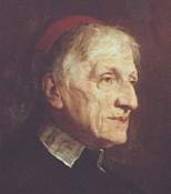
First, as to whether Luther (pictured left) gets the credit he does on account of stumping for the Bible to be not only in the common language but also commonly available to those who were not priests and scholars. My guess is that Luther's translation was fairly shortly made available to all who could read and purchase ... perhaps the earlier editions had a more narrow circulation.

Second, though I do not doubt that there were earlier linguistic and philological scholars Luther's equal and superior (Erasmus, for one, comes to mind) ... Zwingli's critique is tainted by his widely known contempt for -- and perhaps jealousy of -- Luther. Zwingli's zeal for his own cause yielded a violent end. Theirs was not a time for civil academic exchange between scholars, but for diatribes and invective ... in which Zwingli, Luther, and Eck, among others, were now and again active participants.
To which I responded thus:
Good questions. The chief warrant for the association of Luther and the Protestant Reformation in general with the popular circulation of the Bible, in my opinion, comes from the rough historical coincidence of Protestantism with the advent of printing. What is also often overlooked is the fact that there was no widespread literacy among the laity until well into modern times, so that even when the Protestant biblical translations were first made, they were not read far beyond a small circle of literate academic intellectuals.

Zwingli (pictured left) was not only a pugnacious opponent of Luther but a philanderer and adulterer, though I do not know whether it follows that on this account what he said about Luther here is false. My main point in this post was to offer a corrective to the wide-spread assumption that the Catholic Church tried to keep the laity biblically illiterate. The laity were virtually all illiterate for the fist sixteen centuries to begin with, but this hardly meant that they were ignorant of the Gospel. Eamon Duffy's The Stripping of the Altars: Traditional Religion in England, c. 1400-1580 (pictured right) has pretty well debunked that assumption in British scholarship. There were numerous of vernacular translations of parts of the Bible in existence from Anglo-Saxon times (Venerable Bede, etc.) up until Wycliffe, though their circulation naturally was confined to the literate minority (mostly priests). From Wycliffe until the Douay-Rheims (the authorized Catholic translation published by English exiles in Belgium and France before the KJV appeared), the Church did adopt a cautious stance toward Bible translations, not because it was afraid of the laity knowing the liberty of the Gospel (as Fundamentalists often suppose), but because of the proliferation of heresy (such as Wycliffe's).

Though it may not be quite "heresy," once can still see "de-Catholicizing" tendencies in many translations of Scripture today. To take just one example, there are thirteen instances of the term paradosis (usually in its plural form, paradoseis) in the NT, of which ten are critical of human traditions that have departed from God’s Word. In the other three cases, Paul commends traditions to the churches to whom he writes (1 Cor 11:2; 2 Thes 2:15; 3:6). Significantly all ten of the negative references are translated by the NIV (pictured left) as "traditions," while all three of the positive references are deliberately mistranslated as "teachings" -- the translation for didaskalia or didachĂȘ, not paradosis. Such a translation is regrettably tendentious and parochial, slanted in ways that North American evangelicalism's tastes are not offended and its predilictions are confirmed.

But perhaps this latter bit is a discussion for another time.

Monday, September 13, 2004

A conversation on the significance of Hippolytus' Christology (continued)

This conversation is continued from one that was posted earlier (here). Any new readers would be strongly advised to consult my opening statements to that exchange in order to more fully understand the context of this conversation and who Hippolytus was. Again, I begin with an earlier paragraph -- this one from Foster -- to contextualize the remarks that follow.

Foster:
Hippolytus died circa 236 C.E. While his writings may have been "unsystematic," as you say, there is almost no doubt (historically) that he was accused of being a "ditheist" by Bishop Callistus. W.H.C. Frend thinks that the bishop may have been justified in labeling Hippolytus thus. He also thinks that Hippolytus thought of the Logos as a created being, deified for a time. The Catholic writer Edmund Fortman in his book The Triune God also informs us that Hippolytus "rather deliberately seems to avoid putting the Holy Spirit on the same personal plane with the Father and the Son, and to regard Him more as a divine force than a divine person" (page 119). Granted, as Fortman writes, Hippolytus may not have highlighted the "personality" of the Spirit because he was not dealing with a heated issue that arose prior to 381 C.E., namely, the Pneumatomachi Controversy. Nevertheless,he does not seem to ascribe personhood to the Spirit of God and he appears to subordinate the Son (ontologically) to the Father.
Blosser:
I have no serious quarrells here, as far as I can tell. Muslims regularly accuse Christians of tri-theism, and Christians aren't always cautious to avoid being thus misunderstood. If you ask nearly any rank-and-file Christian to explain "God," he will almost always, if he ventures the least bit beyond the confessional formulations, end up saying things that could be understood either in the direction of modalism or tri-theism. Beyond that, it's an empirical fact that trinitarian concepts are refractory to facile understanding and that many people-- even theologians otherwise known for reasonably careful thought-- have expressed themselves incautiously or misunderstandingly on the Trinity.
Interlocutor:
The primary point I want to make about Hippolytus, however, is that his views do not stem from lack of precision or conceptual clarity. Nor do they originate from his being less than circumspect when it comes to articulating his theological concepts. Hippolytus expresses himself the way he does, I contend, because he believes that Christ is a deified creature, one who has gradually progressed from LOGOS ENDIAQETOS to hUIOS (i.e. LOGOS PROFORIKOS) to QEOS.
Blosser:
Well, I suppose we're both on shaky ground where speculating as to Hippolytus' subjective dispositions are concerned-- whether he was less than circumspect or deliberate and clear. I think what I'm more concerned with is the resulting Christological formulation, which, from the anachronistic perspective of post-Nicene theology, is awkward and weird. An orthodox Catholic just would not talk about Christ in such a manner after the Nicene and post-Nicene Christological dogmatic definitions and clarifications.

From a Catholic perspective, one would say, "Look, we know that the Ecumenical conciliar definitions are true, since they were ratified by popes and have the Church-mediated authority of God behind them. So we know that Christ is nothing less than 'true God of true God.' Now all of this is in perfect harmony with Scripture, even though there was a period of some three-hundred years prior to Nicea (AD 325) during which the Church hadn't settled on any particular official way of formulating the relationships between the Persons of the Holy Trinity. Thus there were a range of various Christological formulas proposed by different theologians-- some closer to what we would today call orthodoxy, others at a farther remove, and still others simply heretical. There were various theories (as you well know) -- adoptionist, Ebionite, docetic, gnostic, and so on -- some of which the Church took a position against (such as the wording in the Apostles Creed directed against a docetic view of Christ) and some of which she didn't immediately. St. Thomas Aquinas raised several questions about the tradition of the Immaculate Conception of the Blessed Virgin, which wasn't formally defined until 1854 by Pope Pius IX, but this didn't get him condemned as a heretic because the doctrinal tradition hadn't yet been defined and a degree of latitute was permitted in interpreting the matter. Likewise with Christology in the 3rd century. Hippolytus' formula would be condemned as utterly unorthodox in a post-Nicene milieu, but within the context of his time, it's not altogether incomprehensible to me how he might have come up with such an interpretation as he did. For one thing, there is a progressive dimension to the earthly life of Christ -- from His lowly birth, baptism, and transfiguration,
to his resurrection, ascension, and glorification, etc., which might suggest the sort of thing Hippolitus thought he saw in Christ. It's just not altogether surprising. But why should I want to follow Hippolytus' Christological speculations rather than the Church's official teaching -- especially when they contradict the latter?"
Interlocutor:
The problem, as Swete notes, is that the language of Hippolytus does not allow for the Holy Spirit being an eternal divine relation or Person--he also believes that the Son as such is not eternal--and his thought evidently contains elements of subordinationism. That is, Hippolytus is not just maintaining that the Son or Spirit are subordinate to the Father as respects function; they are subordinate PER ESSENTIAM. Such claims are utterly at odds with Nicene Christianity.
Blosser:
I find it difficult to be surprised by any of this. Until controversy compels the Church to publicly clarify her mind on a doctrinal issue such as this and define it (as at Nicea), one expects to find a great deal of latitude in what is believed and asserted about the question. This is the case at present with questions such as those eschatological questions concerning the anti-Christ, the meaning of the 'millenial' reign of Christ, the tribulation, the 'binding of Satan', etc., etc. And it was the case with other doctrines before they were defined.
Interlocutor:
I don't think the Church allows that much latitude. Bishop Callistus (who was evidently a modalist or Monarchian) accused Hippolytus of being a ditheist. Frend thinks Callistus was quite justified in appending this descriptive term to the Roman theologian. Moreover, if Hippolytus really did believe that Christ was a deified or apotheosized creature as suggested by Refutation of all Heresies, 10, this would put him outside the bounds of orthodoxy. We are not just talking about imprecise God-talk: the Christological ideas contained in the writings of Hippolytus are at odds with basic Trinitarian thought.
Blosser:
From what I just said above, it should be apparent that I have little to disagree with here. On the one hand, it may be ill-advised to judge the official position of the Church with regard to Hippolytus (if it had one) from the epithets of a modalist or Monarchian who was himself a heretic. [Here I retract an earlier assertion I made in ignorance that the Church never canonized Hippolytus, comparing him to Tertullian, since a brief perusal of an article on him made it clear that he had been, in fact, canonized. The matter is made exceedingly problematic by the fact that he developed Christological formulations that are highly heterodox and that he opposed the popes of his day, even getting his small band of followers to elect himself as a rival pope (what Rome calls an "antipope"), and by the fact that, despite these infelicities, he was later reconciled to the Church before he was martyred, earning canonization as a Christian martyr. These latter judgments of the Church, however, cannot be interpreted as approval of any part of his heterodox Christological doctrines.]

If Hippolytus held a form of subordinationism of the Holy Spirit or Son, this should not surprise us. Further, as mentioned before, there is a legitimate respect in which these two Persons of the Trinity ARE subordinate to the Father and proceed from Him, even if this isn't clearly articulated in the possibly deficient formulations of Hippolytus.
Interlocutor:
According to orthodox Trinitarian thought, the Son and Spirit may be subordinate to the Father in a functional sense--though Kevin Giles disputes this point--but no orthodox Trinitarian is going to openly or knowingly concede the second and third Persons of the Trinity are inferior in essence, which (as you know) is what subordinationism entails.
Blosser:
Yes, I know. My point is that the legitimate "functional" subordination of Persons in the Trinity helps us understand, at least, why heresies holding an "essential" subordination of Persons very likely emerged. I'm not sure, but this sort of distinction may not have even been entertained before Nicea (AD 325).
Interlocutor:
My beef with Mr Bowman is that he has illicitly employed Contra Noetum 10.1-2. This passage does not say what he would like it to say.
Blosser:
I have no quarrel with that.
Interlocutor:
Good, that means I can take a breather. :-)
Here I insert a prior paragraph of Foster's to clarify the context of the discussion following:

Interlocutor:
The problem with God willing the Son into existence, even if He did so by means of His own essence of substance, have been detailed by Jesuit Edmund Fortman (quoted earlier). Fortman lists what he calls two "grave defects" with Hippolytus' "theory" of the Father metaphysically (!) willing the Son into existence: (1) The Logos was not a person or the Son eternally, but only precreationally; (2) "The generation of the Son was not essential to God but only the result of a free decision of God. Hence God might have remained without a Son and thus might have remained only one Person" (Fortman, page 118). In other words, the generation of the Son, according to Hippolytus as interpreted by Fortman, was something that may or may not have transpired. It was a contingent divine act.
Blosser:
Yes, indeed. I don't dispute this. What I dispute is the notion that he can be taken for a careful trinitarian theologian. He's the theological equivalent of an Empedocles, and the notion that his writings can meaningfully be adduced against Nicea seem not more plausible to me than that Empedocles metaphysic should be proposed as counting against the Periodic Table of Elements developed in the 19th Century. At most, it seems to me, Hippolytus gives us one snapshot of the kinds of inchoate Trinitarian opinions that existed in the ante-Nicene period.
Interlocutor:
I wonder if Hippolytus can be taken for a "trinitarian theologian" at all. At what point does a person become a non-Trinitarian theologian? The problem I see with the paragraph above is that you appear to assume that Hippolytus is expressing an "inchoate" form of the Trinity doctrine in a non-precise manner. But I submit that a comparison between Ptolemy and Copernicus would be more apt. Hippolytus does not seem to espouse an inchoate form of Trinitarianism at all. His writings help us to see that the famed "way to Nicea" was filled with twists, turns and diversions. Nicea was firm in its insistence that the Son is begotten, not created. He is consubstantial with the Father (says Nicea), not by promotion or progressive divinization, but UT NATURA or PER ESSENTIAM. I don't believe that Hippolytus' statements were even headed in this direction.
Blosser:
As I intimated earlier, we have no choice but to judge Hippolytus' views heretical in terms of the later dogmatic definitions. We might also judge St. Thomas' questions about the Immaculate Conception somewhat short of the orthodox clarity of the 19th century dogmatic definition, though this is a comparison unfair to St. Thomas, who is canonized, after all, and an official Doctor of the Church.

You object to my appearing to view Hippolytus as expressing an "inchoate" form of the Trinity doctrine in a non-precise manner. That may be a bit over-stated. I see him as a "trinitarian" theologian in the sense that he engages in speculative theologizing concerning the Persons of the Trinity, much as you do -- which, I guess, makes YOU a "trinitarian theologian" in my sense (but don't tell the Watch Tower ).

I like your comparison of Hippolytus and Nicea to Ptolemy and Copernicus. I would expand on it only to add Aristarchus, whose heleocentric cosmology in 250 BC anticipated that of Copernicus in the 16th century. Thus, one could appropriately see Aristarchus as standing to Holy Scripture as Ptolemy to Hippolytus and Copernicus to Nicea. What SEEMED like a "Copernican Revolution" from the vantage point of heterodox thinkers sympathetic to Hippolitus, was merely the retrieval of
the original apostolic deposit of faith found anticipated in Scripture. But even that is probably giving far more importance to Hippolytus than is reasonable, for he was certainly no giant in theology like Ptolemy was in astronomy, and there were many other patristics more congenial to Scripture and Nicea than there were astronomers between Aristarchus and Copernicus who were congenial to them.
Interlocutor:
If the pre-Nicenes truly did not view Christ as "fully God," then the early Christians were not simply saying that Christ is subordinate to the Father. Augustine of Hippo writes that each divine Person is fully God or the whole of the Godhead is in each Person. To say otherwise, to deny that Christ is "fully God," is to blatantly contradict what Augustine averred. One who makes such a declaration is not merely insisting that Christ is subordinate in function to the Father. Rather, a Christian who does not affirm the full deity of Christ is subordinating him to the Father vis-a-vis being, essence or nature.
Blosser:
This is assuming that "fully God" can mean only what you think it means. But why should we believe that? It is also to assume that each ante-Nicene utterance regarding a Person of the Trinity is to be accorded the same weight you would accord it in a theological treatise on the Holy Trinity. But why should we think that? It seems to me that there are a wide variety of contexts in which men made reference to "God" ("Father," "Son," and "Holy Spirit") in the first three centuries. If I were to respond in the affirmative to my young son's question "Daddy, did Jesus pray to God?" would this mean that I was denying that Jesus is "fully God"?
Interlocutor:
I use the terminology "fully God" as the Nicenes used it and as Augustine employed the nomenclature. For Augustine of Hippo, the whole of the divine substance is in each Person somewhat perichoretically. For Auggie, the Son is VERE DEUS, VERE HOMO. I understand this to mean that Christ (in Augustine's paradigm) exemplifies or instantiates every divine property exemplified or instantiated by the Father and the Holy Spirit, EX HYPOTHESI.
Blosser:
Yes, but that's exactly my point: you're understanding "fully God" in light of the full-blown Nicean and post-Nicean Augustianian formulae here; but I'm asking why we should think pre-Nicene Church Fathers should have understood by "fully God" all that. Wouldn't that be a bit like expecting Euclid to understand Einstein? We know that Einstein doesn't "refute" Euclid, but he certainly builds on him and develops and refines his understanding. When my father and mother first explained Jesus' relationship to His Father to me, I know I did not fathom the full implications of Augustine's "vere Deus, vere homo" or the Nicene "homoousios" and Christological hypostatic union. In fact, I'm not sure many Christians do, perhaps including myself.

I imagine something like this: even though I don't doubt for a moment the veracity of Trinitarian Christology, I do not suppose that Jesus' identity was grasped by his disciples very well, especially before His resurrection. This is clear from the NT, I think. They supposed He was someone special, even the Messiah, but I doubt they even began to fathom what that meant. Even after His ascension, I think it only natural that the more speculative types of individuals had long bull sessions over their beers brainstorming about what exactly the significance of this Messiah was. I have no doubt that it became part of the Apostolic deposit of Faith that Jesus was God made flesh. But I'm not sure what that meant to those with more speculative dispositions among the patristics in the sub-apostolic age. Some basically towed the Apostolic line. Others ventures farther afield. Eventually Nicea became inevitable and mandatory. The bishop-shepherds of Christ's flock could tolerate only so much confusion in their ranks before they had to pull rank and call the dissenters back to the Apostolic Faith.
Interlocutor:
One Catholic theologian writes:

"There are various aspects hence arising, which do not belong to the Divine Essence as such, but are peculiar to one of the other of the Persons and not common to all. These are the only differences between the Persons. They are not differences of substance or of the essential divine attributes; so they mark, not a multiplication of the Godhead, but of the personalities in the one Godhead."

Hence, "fully God" (as I see it) has reference to the divine essential attributes or necessary properties. So, in answer to your question, I would say that you are not necessarily denying that Jesus is God because you answer in the affirmative. Of course, your example has to do with Christ in his incarnate state though, and not with intra-Trinitarian relations per se. In any event, what I'm trying to say is that God is supposed to instantiate or exemplify certain properties, particular attributes. If a being does not possess such attributes EX TOTO, then the said entity cannot be "fully God." Therefore, if the Son (according to Hippolytus) is a deified creature or not eternal as such, how can he be fully God?
Blosser:
Well, of course such a creature could not be fully God; and you should have no doubts by now about my agreement with you that Hippolytus (like JW teaching) is heterodox! So I think I do see your point quite clearly. My argument has been that the existence of such thinkers as Hippolytus before the Council of Nicea is not to be regarded as a bizarre anomaly even on the supposition that the Nicean dogma of the Holy Trinity is true. It takes time for truth to clarify, especially when it's surrounded by those bent on subverting it.


Textual interpretation & infallibility (continued)

The following discussion is continued from an earlier one published here.

I begin with a statement I made in my earlier discussion, establishing the context:

Blosser:
Well, you might objectively be under that obligation but not subjectively know it, as you would agree, I think. You already accept the infallibility of the teaching of one pope, or at least one man to whom Catholics assign the title of the first pope, at least so far as his written teachings go in his two epistles, which you accept on the basis of tradition as comprising part of the NT. I would be curious about the supposition that God's ability to infallibly guide his servant, Peter, and the other apostles in the oral traditions they bequeathed to us (2 Thes. 2:15) and written traditions, suddenly ceased to be extended any longer with the death of the last apostle.
Foster:
It is possible that I'm objectively under the Pope's authority, but I am subjectively unaware of it. But you know the nature of logical possiblity over against metaphysical or physical possibility. Logically, it is possible that the Absolute is within me, as my old Hindu roomate in Glasgow used to say. However, conceding the logically possibility that the Absolute is within me does not mean that I think it is metaphysically possible that the Absolute can be found inside me.
Blosser:
This goes without saying.
Foster:
Concerning the apostles and infallibility: first, Jehovah's Witnesses believe that the apostles were fallible men that God once used to author infallible documents or utter infallible pronouncements. Notice that we do not think that the men themselves were infallible; only their message, and only some of their messages at that. What I mean by this is that there was no guarantee Peter would speak infallibly when he acted in his capacity as one of God's first century shepherds (Jn 21:15-17).
Blosser:
First, with regard to your assertion that the men themselves were not infallible, but that God used them to author infallible documents, this is a distinction without a difference: you believe what we believe.

Second, where we differ is that we do not believe that God left off His divine work of infallibly guiding his apostles or prophets. Further, we believe the infallibility that you see as extended to the written documents also infused their oral teachings (2 Thes. 2:15).

This means that Catholics would agree with you in denying that any human being is infallible in himself. No properly informed Catholic believes the pope is infallible in his mathematics, his opinions about world politics and world religion,
or even in his opinions about theology.

On the other hand, we simply spell out the implications of the infallible divine guidance of fallible human authors, which you readily grant, to embrace the whole context of God's historical revelation to His people and His ongoing protection of that "deposit of faith" (depositum fidei for your benefit, since you wouldn't understand the English, of course) in the teaching of the Church.
Foster:
Second, we believe that powerful works such as the ability to speak infallibly pretty much died out with the last apostle, who was evidently John. Christians living after the death of John the apostle sometimes report that miracles had ceased in their time, it seems. So there is no way that I could affirm the charism of infallibility obtaining in any man living today.
Blosser:
First, I don't think either of us really wants to speak of the charism of infallibility as an "ability," since we're not attributing infallibility to the human beings themselves but to the divine guidance gifted to them.

Second, I was taught that "miracles ceased" generally with the death of the last apostle at Westminster Theological Seminary where I studied. Miracles were seen as having the purpose of amplifying and reinforcing the divine natue of the great events surrounding the Incarnation and Resurrection.

Yet further study of the matter has led me to question whether this position was anything more than a knee-jerk reaction to any implicatin that real divine guidance could be thought to animate the on-going development and life of the Catholic
Church. St. Augustine gives account of numerous miracles that he witnessed while bishop of Hippo in his own day (5th century) in Book XXII, ch. 8 of Civitas Dei; and I find it interesting that the Scottish Presbyterian editors of the English translation of the Post-Nicene Fathers version of the work are at pains to dismiss these miracles as frauds by which the [Catholic] Church mislead and deceived her members!!

Again, the Protestant tradition affirms that the prophetic office has ceased. But on what basis? There are the usual assetions about the prophetic office having lapsed during the "inter-testimental" period, and "post-apostolic" period, etc.
But why should we assume this? There are plenty of counter-arguments. Newman, for example, is quite good on this. And there are some interesting statements in the NT itself.
The following remarks are, again, mine from the earlier exchange, included here to contextualize the discussion that follows:

Blosser:
Wait a sec: show me one fallible doctrinal pronouncement of an apostle. Where? Whom? Which?
Foster:
I use the word "fallible" in the sense of "being capable of error." Having the capacity or potential for error doesn't necessarily mean that a pronouncement will be erroneous or that a fallible person will speak in error. Since the apostles were fallible men, I believe that every apostle was fallible. This does not mean that the apostles could not speak infallibly, if God so willed. Do I think the apostles ever erred concerning dogma or doctrine? If they did, it doesn't seem that we find any instances in the Bible. Yet, I would say that they were capable of error. It is just the nature of sin.
Blosser:
Two things here. First, I have already stated my agreement with you that infallibility adheres to the divine guidance rather than to any "ability" of the human person in question. Having said that, I would not wish for one moment to speak of the doctrinal pronoucements of the apostles as fallible, since I take these to be the product of the aforementioned divine guidance.

Second, while I would agree that all men are as capable of error as they are of sin, I would want to carefully distinguish the two. Peccability (capability of sinning) is not, as you know, the same thing as doctrinal fallibility (capability of error). I think carelessness about letting the meanings of these slip over into one another can lead to a sort of hyper-pessimistic view such as one finds in the Lutheran view of sin. A Lutheran believes that because we are fallen, we are always sinful or in a state of sin. A Catholic denies this. An adult convert who has just been baptized (washed of the stain of original sin) and has confessed his sins (absolved of his actual sins) is in a state of grace. Now, even if it were true that he fell from this state of grace by committing a mortal sin five minutes later, it could still not be denied that for five minutes he went without sinning. A Lutheran will not admit this, but it seems silly to do so.

Now if this is true of sin, it is even truer of error. It is quite humanly possible to go all day working mathematical problems without committing a single error. This does not mean that one is not capable of error. But it does mean that it is possible for a fallible human being to produce results of mathematical calculation that are infallibly true and accurate. There is nothing odd or goofy about this.

The divine charism claimed for official Church teaching in the Catholic Church is that God infallibly guides the Church in such a way that whenever the Church declares in an official capacity and a public and solemn way what is true of apostolic teaching, God will infallibly prevent her from declaring something true that is false, or vice versa. There doesn't seem to me to be much that is odd or goofy about this either.
Here, again, is another earlier remark:

Blosser:
I think his fears are unfounded. In the first place, I think he'd readily agree that some interpretations of the biblical text, such as the intepretation that says that the apostles assumed the existence of an infinite-personal God, are infalliblly irrevisible. We're not going to come up with a legitimate "interpretation" of the NT that says that the apostles may not have believe in the existence of God.
Foster:
Vanhoozer no doubt would agree with you here.
Blosser:
Agreement is nice.
Regarding Vanhoozer, I had written earlier that I thought that what he fears is:
... losing interpretive "elbow room" where no definitive understanding has been attained by the mind of the Church. For example, some eschatological issues are far from settled in the Catholic tradition, such as the intrepretation of parts of the Book of Revelation. (Wild and wooly interpretations of this book are a dime-a-dozen, as you know, among some of the more fundamentalist sects, even among televangelists.) But the Church allows such interpretive "elbow room" when it comes to these sorts of things; so I think Vanhoozer's fears are unfounded.
Foster:
I think Vanhoozer may fear more than you're suggesting. He apparently thinks that no biblical interpretation should claim that it is absolutely correct. An interpreter should recognize that his view is provisional and subject to change and not just in matters of eschatology. Clearly, Vanhoozer doesn't think that this is always the case, even if it sounds like that is what he's saying. But neither do I think his comments are linked to adiaphora or eschatological issues either. I'll need to read further to see if my intutions are correct though.
Blosser:
My hunch is that you're right about Vanhoozer. I'm not claiming that HE restricts his concerns to adiaphora or eschatological issues, but that the Church allows for differences of opinon on such matters. Hence, I would argue against Vanhoozer where he suggests that no biblical interpretation can claim absolute certitude. This would seem to fall into the sort of skepticism that can be found in Pannenberg, as suggested by an earlier recent correspondence with you. I would insist, with the Church, that the basics of the Christian Faith are knowable and certain, even if this knowledge and certitude is dependent upon faith. For example, I would say that the proposition that the "virgin" cited in Matt 1:23 from the Septuagint Is. 7:14 refers to the mother of Jesus is indisputably certain (de fide) for a Catholic believer, as well as countless other intepretive propositions.

Saturday, September 11, 2004

A conversation on the significance of Hippolytus' Christology

A graduate student at the University of Glasgow currently working on his doctorate in patristics, my Jehovah's Witness friend, Edgar Foster, has been corresponding with me of late about St. Hippolitus of Rome. I should state immediately at the outset that he is the expert here, not I, and my competence has been limited to offering a "sounding board" for Mr. Foster on how an orthodox Catholic might respond to the general outline of his treatment of a pre-Nicene Catholic theologian such as Hippolytus. I did not even know initially that Hippolytus had been canonized by the Catholic Church as a saint. Mr. Foster, if he knew this, was discreet enough not to mention it after seeing some of my assumptions, doubtless so not as to embarrass me. Furthermore, a quick check of the above link to the article on Hippolytus in the online Catholic Encyclopedia reveals that Hippolytus not only entertained seriously hererodox notions about the relationship between God the Father and God the Son bordering if not affirming a curious di-theism, the view that the Father and Son, in some fashion, constitute two independent gods. He also rejected the authority of the Pope, then turned around and had himself elected antipope, a rival claimant to the Holy See, by his small band of followers. The fact that he was later canonized by the Church is explained by the fact that, either immediately before or after his banishment to Sardinia, he was reconciled with the legitimate bishop of the Church of Rome. So Hippolytus is a complex figure indeed, whose theology must clearly be assessed with care and circumspection.

I begin with a paragraph I wrote to Mr. Foster in an earlier correspondence, which sets the state for the remarks that follow:

Blosser:
I would assert here that the writings of Christians in the early third century period (didn't Hippolytus die in the early 200's?) were notoriously un-systematic. Also there's your caveat ["While there are admittedly debatable passages..."] which suggests that whatever you're suggesting must be far from cut-and-dried.
Foster:
Hippolytus died circa 236 C.E. While his writings may have been "unsystematic," as you say, there is almost no doubt (historically) that he was accused of being a "ditheist" by Bishop Callistus. W.H.C. Frend thinks that the bishop may have been justified in labeling Hippolytus thus. He also thinks that Hippolytus thought of the Logos as a created being, deified for a time. The Catholic writer Edmund Fortman in his book The Triune God also informs us that Hippolytus "rather deliberately seems to avoid putting the Holy Spirit on the same personal plane with the Father and the Son, and to regard Him more as a divine force than a divine person" (page 119). Granted, as Fortman writes, Hippolytus may not have highlighted the "personality" of the Spirit because he was not dealing with a heated issue that arose prior to 381 C.E., namely, the Pneumatomachi Controversy. Nevertheless, he does not seem to ascribe personhood to the Spirit of God and he appears to subordinate the Son (ontologically) to the Father.
Blosser:
I have no serious quarrells here, as far as I can tell. Muslims regularly accuse Christians of tri-theism, and Christians aren't always cautious to avoid being thus misunderstood. If you ask nearly any rank-and-file Christian to explain "God," he will almost always, if he ventures the least bit beyond the confessional formulations, end up saying things that could be understood either in the direction of modalism or tri-theism. Beyond that, it's an empirical fact that trinitarian concepts are refractory to facile understanding and that many people-- even theologians otherwise known for reasonably careful thought-- have expressed themselves incautiously or misunderstandingly on the Trinity.
Here let me insert once more something I wrote in my earlier correspondence with Mr. Foster in order to contextualize the exchange that follows:

Blosser:
The NT itself partakes of such ambiguities, doesn't it. I see nothing prohibitively problematic about such things as calling God "one" and Jesus His "Son," then portrayhing Jesus in a subordinate role, while still assuming that Jesus too is God, though not God the Father. If the Trinity doctrine is true, what else would we expect but such seemingly confused language?
Foster:
The problem, as Swete notes, is that the language of Hippolytus does not allow for the Holy Spirit being an eternal divine relation or Person--he also believes that the Son as such is not eternal--and his thought evidently contains elements of subordinationism. That is, Hippolytus is not just maintaining that the Son or Spirit are subordinate to the Father as respects function; they are subordinate PER ESSENTIAM. Such claims are utterly at odds with Nicene Christianity.
Blosser:
I find it difficult to be surprised by any of this. Until controversy compels the Church to publicly clarify her mind on a doctrinal issue such as this and define it (as at Nicea), one expects to find a great deal of latitude in what is believed and asserted about the question. This is the case at present with questions such as those eschatological questions concerning the anti-
Christ, the meaning of the 'millenial' reign of Christ, the tribulation, the 'binding of Satan', etc., etc. And it was the case with other doctrines before they were defined.

This does not mean that there was no objective theological truth concerning the issue prior to its magisterial definition by the Church, or that the Church simply "fabricated" its doctrine out of thin air and then imposed it arbitrarily on her members. The objective basis for the trinitarian understanding of God is clearly evident in Scripture and tradition, we believe, even though this was likely not clear to everyone prior to her dogmatic definitions. This is true even regarding something as mundane as which books constitute the Bible-- which was anything but a definite article of faith prior to the close of the fourth century AD.

Hence, if Hippolytus held a form of subordinationism of the Holy Spirit or Son, this should not surprise us. Further, as mentioned before, there is a legitimate respect in which these two Persons of the Trinity ARE subordinate to the Father and proceed from Him, even if this isn't clearly articulated in the possibly deficient formulations of Hippolytus.
Foster:
My beef with Mr Bowman is that he has illicitly employed Contra Noetum 10.1-2. This passage does not say what he would like it to say.
Blosser:
I have no quarrel with that.
Foster:
The problem with God willing the Son into existence, even if He did so by means of His own essence oe substance, have been detailed by Jesuit Edmund Fortman (quoted earlier). Fortman lists what he calls two "grave defects" with Hippolytus' "theory" of the Father metaphysically (!) willing the Son into existence: (1) The Logos was not a person or the Son eternally, but only precreationally; (2) "The generation of the Son was not essential to God but only the result of a free decision of God. Hence God might have remained without a Son and thus might have remained only one Person" (Fortman, page 118). In other words, the generation of the Son, according to Hippolytus as interpreted by Fortman, was something that may or may not have transpired. It was a contingent divine act.
Blosser:
Yes, indeed. I don't dispute this. What I dispute is the notion that he can be taken for a careful trinitarian theologian. He's the theological equivalent of an Empedocles, and the notion that his writings can meaningfully be adduced against Nicea seem not more plausible to me than that Empedocles metaphysic should be proposed as counting against the Periodic Table of Elements developed in the 19th Century. At most, it seems to me, Hippolytus gives us one snapshot of the kinds of inchoate Trinitarian opinions that existed in the ante-Nicene period.
Again, I insert a quote from the earlier exchange to contextualize what follows:

Blosser:
I think this is merely a reflection of the fact that Christ is clearly in many respects subordinate to the Father. But even if we talked about the Petrine notion of our being "partakers of the Divine nature" in the Greek language of THEOISIS (or QEOSIS), neither you nor I could, strictly speaking, call one another or ourselves "God" even in the sense that Hippolytus calls Christ "God."
Foster:
If the pre-Nicenes truly did not view Christ as "fully God," then the early Christians were not simply saying that Christ is subordinate to the Father. Augustine of Hippo writes that each divine Person is fully God or the whole of the Godhead is in each Person. To say otherwise, to deny that Christ is "fully God," is to blatantly contradict what Augustine averred. One who makes such a declaration is not merely insisting that Christ is subordinate in function to the Father. Rather, a Christian who does not affirm the full deity of Christ is subordinating him to the Father vis-a-vis being, essence or nature.
Blosser:
This is assuming that "fully God" can mean only what you think it means. But why should we believe that? It is also to assume that each ante-Nicene utterance regarding a Person of the Trinity is to be accorded the same weight you would accord it in a theological treatise on the Holy Trinity. But why should we think that? It seems to me that there are a wide variety of contexts in which men made reference to "God" ("Father," "Son," and "Holy Spirit") in the first three centuries. If I were to respond in the affirmative to my young son's question "Daddy, did Jesus pray to God?" would this mean that I was denying that Jesus is "fully God"?

Thursday, September 09, 2004

Textual interpretation & infallibility

Like Catholics and evangelical Protestants, Jehovah's Witnesses accept the "infallibility of Scripture," which is shorthand for saying that the Holy Spirit infallibly guided the human authors of the Bible, making full use of their human faculties, to have them say what He wanted them to say, thus making Scripture a trustworthy special Revelation of God's truth for mankind. Unlike Catholics and like evangelical Protestants, however, Jehovah's Witnesses accept the Bible as their ultimate authority, roughly according to the Protestant principle of "sola Scriptura" formulated by Philip Melanchthon. The following discussion is about the question of authority in interpreting scripture, or even texts in general, but with particular reference to the question of infallibility, which Protestants traditionally have assigned to Scripture alone, but Catholics have assigned also to the Church and its teachings, including the Pope under certain circumstances. Edgar Foster (my Jehovah's Witness interlocutor) responds to my previous assertion that as surely we would both affirm that St. Paul's interpretations of the Gospel are absolute and infallible, so must a Catholic affirm that Pope Pius XII was infallible in his proclamation of the dogma of the Assumption of Mary.

Foster:
Maybe Catholics have to affirm the "infallible" proclamation of Mary's Assumption made by Pope Pius XII, but I am under no such obligation since I do not recognize any pope's authority as the Vicar of Christ or Universal Shepherd.
Blosser:
Well, you might objectively be under that obligation but not subjectively know it, as you would agree, I think. You already accept the infallibility of the teaching of one pope, or at least one man to whom Catholics assign the title of the first pope, at least so far as his written teachings go in his two epistles, which you accept on the basis of tradition as comprising part of the NT. I would be curious about the supposition that God's ability to infallibly guide his servant, Peter, and the other apostles in the oral traditions they bequeathed to us (2 Thes. 2:15) and written traditions, suddenly ceased to be extended any longer with the death of the last apostle.
Foster:
Similarly, you don't accept or submit to the Governing Body of Jehovah's Witnesses, as I do. Granted, their "pronouncements" are fallible, as were the doctrinal decisions of the apostles.
Blosser:
Wait a sec: show me one fallible doctrinal pronouncement of an apostle. Where? Whom? Which?
Foster:
But they too are capable of communicating "fallible" truth. We just do not believe that the GB has the so-called "charism of infallibility." But you knew all of this anyway. :-)
Blosser:
Um ... well, yeah.
Foster:
What seems to concern Vanhoozer is the "conviction" that "a single correct interpretation" of the biblical text "is our exclusive possession" (page 184). He seems to, in some sense of the word, fear "dogma," though I need to read further to see how he correlates his view (if this is in fact his view) with the Christian faith as practiced by Catholics or Protestants. Surely there is room for dogma in the Christian faith, isn't there?
Blosser:
I think his fears are unfounded. In the first place, I think he'd readily agree that some interpretations of the biblical text, such as the intepretation that says that the apostles assumed
the existence of an infinite-personal God, are infalliblly irrevisible. We're not going to come up with a legitimate "interpretation" of the NT that says that the apostles may not have believe in the existence of God.

In the second place, I think what he fears is losing interpretive "elbow room" where no definitive understanding has been attained by the mind of the Church. For example, some eschatological issues are far from settled in the Catholic tradition, such as the intrepretation of parts of the Book of Revelation. (Wild and wooly interpretations of this book are a dime-a-dozen, as you know, among some of the more fundamentalist sects, even among televangelists.) But the Church allows such interpretive "elbow room" when it comes to these sorts of things; so I think Vanhoozer's fears are unfounded.

Monday, August 23, 2004

Where art thou, O liturgical beauty and holiness?

Back in February of 2003, a Catholic Long Islander who calls himself a "Generation X Revert" wrote a brilliant poem entitled "Catholic Howel," patterned after Allen Ginsberg's classic "Howl." The Catholic poem opens with the lines:
"I saw the best Catholics of my generation destroyed by
madness, starving,
hysterically naked
dragging themselves through the streets at dawn looking
for beautiful Liturgy ..."
The sentiment is one with which I'm sure many of us can identify. In any case, it got me thinking again about liturgy. I used to be rather indifferent to liturgy at one time. But I've come to see more clearly over the last decade of my life how liturgy impacts the practical lives of people and what they believe. In other words, I've come to a better understanding the law: lex orandi, lex credendi (the law of prayer is the law of belief). That is to say, how we pray will have an impact on what we believe and ultimately on how we live.

It's funny how out liturgical sensibilities are conditioned by our experience. My immediate background before becoming a Catholic was in the Episcopal Church. I was familiar with the restrained decorum, reverence, and beauty of Anglican liturgy and hymnody before crossing over to Rome. Whatever one thinks of Thomas Cranmer and Miles Coverdale, I think all will agree that there is some truth in the remark of those who speak of their beautiful cadences and unsurpassable use of English in the Book of Common Prayer. So you may understand it when I say that it was with an aesthetic sense of having "married down" that I found myself as a new Catholic assaulted by a new liturgy of 1970 vintage, hastily cobbled together after the Second Vatican Council, ineptly translated, freighted with banalities, and serenaded by guitar-strumming song leaders crooning Marty Haugen ditties into staticky microphones. From our point of view in the American Catholic Church today, the Anglican liturgical legacy we experienced in the Episcopal Church compares quite favorably, to say the least. Many of us would probably jump at the opportunity to assist at Mass at an "Anglican Use" parish, where the liturgy of the Book of Common Prayer has been slightly modified to bring its most basic points of doctrinal divergence into conformity with Catholic teaching.

The irony is that many of us forget the multitudes of English, Welsh, and Irish Catholics who laid down their lives rather than accept the imposition of the Book of Common Prayer by Cranmer (pictured right), the Protestant Archbishop of Canterbury and apostate Catholic who fiercely hated the Holy Sacrifice of the Mass and by means of his liturgical revolution in England robbed generations of their Eurcharistic patrimony. The Venerable John Henry Cardinal Newman, we may tend to forget, did not consider Anglicanism to be a slightly deficient form of Christianity, but, in fact, an entirely different religion. The Book of Common Prayer refers to the Sacrifice of the Mass as a blasphemy, denies five of the seven sacraments, denies the intercession of the saints and prayers for the dead, forbids any notion of reservation or adoration of "communion bread," and substitutes the authority of the English Crown for that of the Holy See.

Does this mean that the new Catholic Mass, even if its implementation is usually aesthetically deficient, is at least doctrinally better? Well, yes and no. Yes, it is better in that the Sacrifice of the Mass is not declared a blasphemy and there is no denial of the seven sacraments, intercession of the saints, prayers for the dead, reservation or adoration of the Blessed Sacrament, or denial of Rome's authority. Not, at least, in principle. But the ironies multiply when, upon examining the origin of the new Catholic Mass, we see that a committee of Protestants was given an advisory role in its composition, that many of the central and distinctive elements of Catholic Eucharistic theology are played down, such as the Sacrifice and Real Bodily Presence at the heart of the liturgy. Many of the other changes introduced in the new Catholic Mass have had the effect of undermining these traditional Catholic teachings, such as the elimination of the Communion Rail, the introduction of standing instead of kneeling to receive Communion, the reception of Communion in the hand instead of on the tongue, the use of altar girls and female lectors, and the regular use of Extraordinary Ministers of Holy Communion, so that the altar looks like a common kitchen table being set for a covered dish dinner.

What the Second Vatican Council called for in its Constitution on Divine Liturgy (Sacrosanctum Concilium) was a "reform" of the traditional Roman Rite, not a replacement of it by the creation of a new Catholic Mass as a substitute for it. What we have now, however, is a hastily imposed substitute for the traditional Mass, a substitute that is quickly becoming a forum for seemingly perpetual experimentation, which in the experience of the younger generations is the only Mass that they have known. That the new Mass represents what Cardinal Ratzinger calls a "rupture" in liturgical tradition is clear even from the remarks of the most ardent defenders of the new Mass who were responsible for cobbling it together. Fr. Joseph Gelineau, S.J., for example, who was described by the architect of the new Mass, Archbishop Annibale Bugnini, as one of the "great masters of the international liturgical world," declares with apparent satisfaction:
"Let those who like myself have known and sung a Latin-Gregorian High Mass remember it if they can. Let them compare it with the Mass we now have. Not only the words, the melodies, and some of the gestures are different. To tell the truth it is a different liturgy of the Mass. This needs to be said without ambiguity: the Roman rite as we knew it no longer exists. It has been destroyed."
On the other side of the fence, those who are most critical of the new Mass find themselves in complete agreement with this description of liturgical rupture and dislocation, but find the condition utterly devastating and lamentable. Monsignor Klaus Gamber, for example, sums up the result of the post-Vatican II liturgical innovations thus: "Today we are standing before the ruins of almost 2,000 years of Church tradition." Joseph Cardinal Ratzinger likewise sums up the liturgical aftermath of the Council in close-to-apocalyptic terms: "The result has been not an animation but a devastation."

Since the liturgical reforms mandated by Vatican II have not yet even begun to be implemented, and since the widely available liturgical options are far from good, where is a Catholic to look? In his concluding address at a liturgical conference at the Abbey of Fontgombault in 2001, Cardinal Ratzinger significantly declared that it is "indispensable to continue to offer the opportunity to celebrate according to the old Missal, as a sign of the enduring identity of the Church.... [T]his Missal of the Church should offer a point of reference, and should become a refuge for those faithful who, in their own parish, no longer find a liturgy genuinely celebrated in accordance with the texts authorized by the Church.... What we previously knew only in theory has become for us a practical experience: the Church stands and falls with the liturgy. When the adoration of the divine Trinity declines, when the Faith no longer appears in its fullness in the liturgy of the Church ... then faith will have lost the place where it is expressed and where it dwells."

[All quotations from Cardinal Ratzinger are from Looking Again at the Question of the Liturgy with Cardinal Ratzinger, edited by Alcuin Reid, OSB (Farnborough, Hampshire, UK: St. Michael's Abbey Press, 2003)]

Friday, August 20, 2004

On the Instruction Redemptionis Sacramentum and the institutionalization of abuses in the Novus Ordo Mass

On April 23, 2004, the Vatican released its latest Instruction on the Eucharist, Redemptionis Sacramentum, an instruction on certain matters to be observed or to be avoided regarding the Most Holy Eucharist. The Adoremus Bulletin, which reprinted the entire Instruction in it's Special Documentary Edition of July-August, 2004, called it "unprecedented and highly important."

My question, however, is whether we have not reached the point of such gaping discrepancies between the word and deed that it must be seriously asked whether any such instruction from the Vatican can be taken seriously. Take the comparatively "small" matter of "Extraordinary Ministers of Holy Communion," where members of the laity are permitted to assist in the distribution of Communion. Here is what the instruction states:
"[157.] If there is usually present a sufficient number of sacred ministers [priests and deacons] for the distribution of Holy Communion, extraordinary inisters of Holy Communion may not be appointed. Indeed, in such circumstances, those who may have already been appointed to this ministry should not exercise it. The practice of those Priests is reprobated who, even though present at the celebration, abstain from distributing Communion and hand this function over to laypersons.

"[158.] Indeed, the extraordinary minister of Holy Communion may administer Communion only when the Priest and Deacon are lacking, when the Priest is prevented by weakness or advanced age or some other genuine reason, or when the number of faithful coming to Communion is so great that the very celebration of Mass would be unduly prolonged. This, however, is to be understood in such a way that a brief prolongation, considering the circumstances and culture of the place, is not at all a sufficient reason....

"[160.] Let the diocesan Bishop give renewed consideration to the practice in recent years regarding this matter, and if circumstances call for it, let him correct it or define it more precisely...." [emphasis added]
My experience suggests that little will be done to bring the ordinary practice of most parishes in conformity with these norms. Certainly most individual priests lack the fortitude to carry out such reforms in the context of parishes and dioceses where the practice -- as in most parishes -- has been quite otherwise. Need I explain this to anyone? Is there any Catholic, even one who considers himself lucky enough to be in a generally "good" parish, who does not witness two or three or even half-a-dozen "Extraordinary Ministers of Holy Communion" (usually called "Eucharistic Ministers," and usually middle-aged women) gathering around the altar after the recitation or singing of the Agnus Dei ("Lamb of God ...")?

This practice is a comparatively minor abuse. It involves no priest preaching open heresy or trying to consecrate a Dominos Pizza. But it is still a serious abuse: it's effect is desacralizing -- that is, it detracts from the sacredness of the Sanctuary -- the Holy space around the altar that used to be separated from the congregation by the Communion Rail, or, before that, the Rood Screen. In fact, so much of our experience has been anomalous that the irregular has come to seem regular and one could speak of the institutionalization of abuse in the experience of Novus Ordo parishes. The Congregation for Divine Worship and the Sacraments admitted as much in its official journal Notitiae (Oct. 1992), in which an editorial laments:
"Thirty years are too many for an incorrect praxis, which in and of itself tends to be already fixed in place. The malformations born in the first years of the application still endure, and gradually, as new generations follow one another, could almost become the rule."
The problem, of course, is that these abuses have "become the rule." Most Catholics today couldn't recognize a liturgical abuse if it slapped them in the face. All they have ever experienced in church, virtually, has been liturgical abuse.

The trouble with focusing on abuses in the Novus Ordo Mass is that it's easy to lose sight of the forest for the trees. Here we've focused on abuse involved in the role of Extraordinary Ministers of Holy Communion. This may lead one to think that the problems with the Novus Ordo are therefore minor, since this isn't a truly grave abuse. But the problem is that the abuses are cumulative and epidemic. When you look into the history of the development of what constitutes current liturgical practice, what at first appear to be minor blemishes begin to take on a more serious cast.

Take Communion in the hand. Nobody considers that an "abuse" anymore. Even Cardinal Ratzinger has recently made light of it and suggested that people not make an issue of it. It is true that Communion had been given in the hand in the early Church. But as German liturgist Fr. Joseph Jungmann has explained, as reverance for the Blessed Sacrement deepened in the life of the Church over the centuries, the tradition developmed that only that which was consecrated could touch the Host, and this exceptional privilege as reserved for the consecrated hands of the priest, which had been anointed for this purpose at his ordination. There was a similar reverance for the Holy of Holies and Ark of the Covenant in the Tabernacle of the ancient Hebrews, and the privilege of entering its precincts was reserved to the High Priest alone on certain specified occasions. Today in many parishes all barriers have been seemingly removed, and unconsecrated laymen and laywomen can waltz up to the Altar or Tabernacle and handle the consecrated Hosts as though they were going to the kitchen for a common snack.

The practice of Communion in the hand was first resurrected by Protestants in the 16th century as an expression of their belief that the bread received at Communion is merely ordinary bread and that the person distributing it is an ordinary person. In our own time, the practice of Communion in the hand began shortly after the Second Vatican Council among "progressive" parishes in the Netherlands, whence it spread to neighboring countries. When Pope Paul VI subsequently polled the bishops of the world as to the acceptability of the practice, the overwhelming majority replied that it was not, and the Instruction Memoriale Domini, published in 1969, gave a clear exposition of the reasons for the traditional practice and the threat to reverance posed by the abuse of Communion in the hand. Pope Paul made the following direct appeal to the bishops of the world:
"The Supreme Pontiff judged that the long received manner of ministering Holy Communion to the faithful should not be changed. The Apostolic See therefore strongly urges bishops, priests and people to observe zealously this law, valid and again confirmed, according to the judgment of the majority of the Catholic episcopate, in the form which the present rite of the sacred liturgy employs, and out of concern for the common good of the Church." (Memoriale Domini, the Instruction on the Manner of Administering Holy Communion, The Congregation for Divine Worship, May 29, 1969)
This was the Church's instruction. Was it implimented by the bishops? On the contrary, in country after country, it was ignored by the very bishops who had voted to uphold the traditional practice, as the Holy See, following the lead of these bishops, yielded in abject surrender to the disobedience of the rebels.

The same is true with other practices, now commonplace, like Communion in the hand, that were originally proscribed by the Conciliar Church, then later legitimated under pressure -- practices such as the ordinary use of Extraordinary Ministers of Holy Communion, Communion under both kinds, altar girls, the regular use of female lectors, the ideologically tendentious mistranslations of the New Mass by the International Commission for English in the Liturgy (ICEL) -- for example, translating pro multis ("for many") as "for all" -- liturgical dancing, balloons and clowns, slipshod or heretical catechesis, the promotion of heterodox literature as though it represented orthodox Catholicism, etc.

At present, there are few places in the world where one can find a Novus Ordo Mass celebrated without abuse, with dignity and reverance. The Basilica of the National Shrine of the Immaculate Conception in Washington, DC, is one example, as is the Brompton Oratory or Westminster Cathedral in London. But examples are few. The Church seems to have effectively abandoned the task of carrying out the reform of the traditional Roman Rite mandated by Sacrosanctum Concilium, the Second Vatican Council's Constitution on the Sacred Liturgy. Fr. Joseph Fessio's Adoremus Society seems to be about the only organization devoted to carrying out the concerns of the Council Fathers, but its monthly Adoremus Bulletin seems almost wholly devoted to pointing out abuses in the Novus Ordo Mass and pointing out the instructions of the Vatican on how these abuses are to be corrected, rather than with any substantial concern on how the traditional Roman Rite might be reformed. This leaves Catholics who desire to be faithful in the worship in a pinch. The Novus Ordo is so far from being an established 'rite' that it constitutes what Msgr. Klaus Gamber described as a "liturgical destruction of startling proportions -- a debacle worsening with each passing year," a "dismantling of the traditinal values and piety," a "destruction of the forms of the Mass which had developed organically during the course of many centuries" (The Reform of the Roman Liturgy, 1993, p. 5). Meanwhile, the only truly established Western 'rite' is one that comes with excellent credentials and has served the Church well for centuries: the traditional Roman Rite, the oldest Christian liturgical rite in the world, whose Roman Canon stems from the fourth century. The only problem is that nearly all bishops and priests seem so threatened by it that, as with so many other things, they are reluctant to implement the provisions for its continued use guaranteed by Pope John Paul II in Ecclesia Dei adflicta. So what's a wanna-be-good Catholic to do?

Wednesday, August 18, 2004

On divine right of kings & questioning authority

Foster: I've already tracked down some sources in my personal library and they back what you say. Here again, you must keep in mind that I was posing a question and doing so because of what I read in Hilary Putnam's book. Referring to his earlier study, Reason, Truth, and History, Putnam states:
"I also pointed out that even believing Catholics now concede that the Church's support for monarchy [in connection with the Divine Right of Kings] was based as much on political considerations as on revelation or sound theology. In short, the belief in the Divine Right of Kings lacks, and, I claim, always lacked, a rational justification" (Ethics without Ontology, p. 114-115).
Blosser: The "Divine right of Kings," as I've said, is not and never has been a Catholic doctrine, despite the fact that one may find individual Catholic writers who have, reasoning from St. Paul's injunction to submit to all governing authority as from God in Rom. 13, defended it. Not only that, but it may well be argued that the notion of the Divine Right of Kings is a Protestant invention, as does Hilaire Belloc in Characters of the Reformation, where he argues that James I of England was the first to inaugurate its full and undisputed practice. Belloc writes:
"Here it may be objected that the launching of this new doctrine (the first name of which was 'The Divine Right of Kings') and the attempt to practice it was much older. For we must always remember that whether it is called 'The Divine Right of Kings' or 'The Full Independence of the Nation' it comes, as we shall see in a moment, to exactly the same thing, expressing the same idea and having the same consequences.

"The first official and public statement of this sort was made by [Thomas] Cranmer, the first Protestant Archbishop of Canterbury, at the coronation of little Edward VI, as early as 1547, fifty-six years before James I came to the English throne. The doctrine had been formally enunciated in a loud voice from the altar steps of Westminster Abbey, in the sermon which Cranmer addressed to the little boy-King on his enthronement. Cranmer reminded him that no power on earth could claim any rights over the King of England, and he said this, of course, as a direct challenge
to the Papacy.

"Hitherto, it had been admitted throughout Christendom that quarrels between Christian nations were subject to the general moral authority of the Church, and to ultimate appeal to the Papacy in cases of specific dispute. In other words, Christendom had been regarded as one realm, of which the particular nations were only provinces; and a certain moral law and a certain visible organization were accepted as having common authority throughout....

"At this point it is important to understand how this phrase, which souns to us so quaint, 'The Divine Right of Kings,' is really identical with our most modern nationalist doctrine.... The operative word in the sentence is not 'King' but 'Divine' -- and when people talked of 'Divine Right' they meant the
right to govern with private responsibility to God alone, and not to any general organizatin of Christendom here on earth." (Hilaire Belloc, Characters of the Reformation, ch. 15: "James I of England," pp. 135-137, emphasis added)
Foster: So if it is "defined dogma," then its veracity cannot be questioned. Defined dogmas cannot be "tested" or "examined" in order to make sure they really orobjectively *are* revealed truths or ecclesiastically binding for the faithful. We've talked about this point before, but I still think that Catholics have not provided a satisfactory answer to the question, "How do you [i.e. Catholics] know that the dogmas defined by the Church are objectively true and beyond being questioned or contested?" Maybe what you write below addresses this issue.

Blosser: Well, of course there is nothing wrong in, say, my puzzling over what the Church's dogma of the Holy Trinity means, or examining the historical sources to see whether the Church Fathers accepted the doctrine, etc. One can certainly do this. I suppose one is encouraged to do this, since it can only strengthen his faith.

But questioning the Church and her teachings from the standpoint of unfaith or bad faith is another mater. Perhaps an analogy may help. Once a Catholic trusts the Church as Mater et Magister, to question or test her teaching would be a little like growing up in a home where at dinner time every day you scrupulously interrogate your mother to make sure that what she's served up for the family meal isn't contaminated or tainted with poison.

You raise the question how Catholics can know that what their Church teaches is objectively true and beyond being questioned or contested. That's a fair question. But the thing to see is that there's nothing particularly unique about the position of the Church here, for one could ask the same question of a good JW's faith in God's existence and unicity. I would certainly imagine that you would say that you are free to "examine" or "test" these doctrines (which Catholics share with JWs), as we have done in some of our classes while reading the likes of St. Anselm, St. Thomas Aquinas and the counter-arguments of Hume and Kant. But to seriously doubt these truths, or to cast them into the category of claims that are continually debatable, would make one a poor JW or Catholic, would they not? So how do we know that God exists and that He is one? Well, I suppose we'd say because we've come to trust the teaching of our religious instructors, or the veracity of the Bible, etc. Is our conviction that God exists and is one "beyond being questioned"? Well, it depends what that means. In one sense, we'd likely respond: yes, it's something we consider established, which we don't bother to seriously question. It's a conviction so basic it occupies the level of a properly basic assumption. But in another sense, we'd probably both admit that these convictions are not beyond question -- particularly in the sense that there are other people who seriously question them, and we recognize the existence of various arguments that might be mounted in support of their truth, etc. Catholic dogma, while not always derived directly from Scripture, are all of a similar order, I would argue.

Foster: No matter how much I trust another human being, I always reserve the right to question or contest propositions that are uttered or written by him/her. I believe that the same principle applies to those taking the lead in the Christian congregation. Seeing that all teachers in Christ's EKKLHSIA are fallible with respect to action and speech, I must always "make sure of all things" and test the "spirits" to determine whether they are from God (James 3:1-2; 1 Thess 5:21; 1 Jn 4:1).

Blosser: Starting with the latter assertions first, I would agree with most of what you say here. All things must be tested. Particularly the opinions of fallible human beings. However the case is complicated when we come to the opinions of those fallible human beings who, as Apostles, wrote the Gospels and Epistles that comprise the New Testament. For though they, as human beings, are properly described as fallible, we generally acknowledge that God somehow in His own miraculous way supernaturally guided them in their teaching and writing to express infallibly those truths that He wished us to know for our salvation. So should we question the opinions of the biblical writers? Well, in one sense, I think we'd agree that we ought to. We ought to examine, test, and scrutinize them so that we can know their veracity and be able to demonstrate this veracity as best we can. But in another sense, I think we would both agree that there would be something a trifle perverse about a religious believer who indefinitely continued to seriously question whether this verse or that chapter or this epistle is truly part of God's revelation to us. And, as you know, those of us who are Catholic would regard in the same light the declarations of our college of bishops in union with the Holy Father when these are directed to the universal Church, address a serious matter of faith and morals, and are expressly intended as an exercise of the Church's magisterial((or prophetic) office.

The matter can be further complicated by the fact that a defined dogma may itself come under disputation as to its proper interpretation over time. When this happens, it may require the Church once more to step in and offer a further clarification or refinement in her definition of the issue. This has happened on such issues as the reservation of priestly ordination to men alone, or the sinfulness of contraception, etc. So one could say there is an ongoing dialectical relationship between the Church's (1) dogmatic office of defining doctrine and (2) her members' questioning, puzzling over, and examining of those dogmas.

Friday, August 06, 2004

God & Gender language

Edgar Foster: I know you'll disagree, but I find instances in the OT especially, of God relating to us in ways that highlight His "feminine" side. In short, I believe that the metaphors in Scripture depicting God as feminine and/or masculine are just that. Terence Fretheim and George Caird have both produced excellent works dealing with the metaphorical imagery contained in Holy Writ. I think that is what we have going on when we read texts referring to God as Father or as a caring mother.

Philip Blosser: Perhaps one source of the difference between us on this score is that your [Jehovah's Witness] theology has no divine Incarnation in Jesus. If I were a unitarian, I might also feel inclined to say, with the contemporary feminists and others, that all of this in the Bible is mere "metaphor." But Jesus was/is a MAN, and that ain't no "metaphor." And while the OT says that God is LIKE a mother, I'm not sure it says that God IS a mother, in the way that it says that God IS a Father. But that's secondary. I think the whole scenario which describes our language of God as "anthropomorphic" is absolutely upside down. Who do we think WE are, anyway, making ourselves the "archetype" by which to describe God?! Rather, I think the human language of the Bible is "theomorphic," in that God is, as Calvin says, "lisping" to us as infants, using language that we may have some 'pale' understanding of, but that the "Fatherhood" of God in Himself is something that far exceeds our human capacity to fathom. But He IS certainly FATHER, despite the occasional feminine similie by which we say he may be "like" a mother (much in the way we describe some fathers a "gentle"); but he IS not a mother.

Foster: The incarnation is an issue that I have purposely tried to avoid in this discussion. Granted, if Christ was really God incarnate, then I think you would have a point about the masculine issue. However, I do not affirm the incarnation and, what is more, yours truly does not believe that Christ (the Messiah) had to be a man. If the Edenic Fall had transpired differently, it is quite plausible that Messiah could have been a woman. There certainly is no functional or ontological reason why God's anointed could not have been a woman. This is my opinion and does not represent the official view of the JW organization.

Blosser: I suppose it's hypothetically possible that God could have saved the world without an Incarnation or Messiah at all, or that he Messiah could have been a particularly intelligent frog. But in the order of divine Providence, the Almighty has chosen to mirror His own nature in His plan of redemption, so that the whole cosmic mystery of creation and redemption is mirrored in the pale echtype of our gendered relationship to one another as human men and women.

Foster: As for the holy spirit, I've always found it interesting that Scripture uses masculine, feminine and neuter pronouns to refer to "it."

Blosser: Even in English, one could refer to the Godhead as "it," though it wouldn't eviscerate God's "personal" nature.

Foster: I'll check out Leon Podles' book soon, The Church Impotent: The Feminization of Christianity. But I must confess that I do not understand what you mean when you say that religion is losing its "manly" nature. Why should religion be exclusively or primarily manly? What is wrong with a little muliebrity in religion?

Blosser: It's become soft and feminine in a disgusting, touchy-feely sort of way. It's not that the masculine cannot be compassionate or merciful. Rather, it's what many religious groups have been shying away from confrontational issues such as truth, sin, apologetics, asceticism, repentance, sanctification, etc., and concentrating, instead, on such things as "inclusiveness," "fellowship," "belonging," "self-esteem," "self-empowerment," "overcoming depression," "self-acceptance," etc. Kneeling on a hard marble floor has been replaced by sitting on soft padded pews, and gregorian chant has been replaced by guitar-strumming 'feel-good' ditties. This is the kind of thing I mean.

Foster: I am not comfortable with calling the Judaic or Christian account of God's dealings a "myth" or "fable." Yes, one could define MUQOS in a way that vitiates the pejorative connotations often associated with MUQOI. However, I feel much safer following the lead of the apostles, who went to great lengths showing that Christianity is neither a myth nor is it based on myths or fables. Story may be better, though NT Wright's NTPG illustrates difficulties, I think, that may result from this usage. There may be a place for mythology in the life of the Christian. I just do not think that a Christian should categorize the Christian account of Jesus Christ as a true myth. According to Mayhan and Campbell, myths are true anyway!

Blosser: I agree, as a matter of tactical prudence, that using "myth" or "fable" is fraught with hazards. But I think that part of your hesitation may also stem from what I mentioned before, namely an inclination to see
truth as conveyed only through raw empirical description, a preference for historiography over poetry, etc.

Foster: Granted, there are stories (myths) that serve as indirect testimony to the truth revealed through Christ Jesus and the OT prophets. But why spend a lot of time with imperfect images of the truth when one can have the real thing?

Blosser: Perhaps this was what I was trying to say about philosophy. Why spend a lot of time with Heidy and Hegelly when one can have Augustine, Thomas, the Bible, and the Magisterium? ;-) Don't get me wrong. You know I don't regret spending my life studying apostate philosophy!! Someone's got to take out the garbage. ;-)

Foster: . . . Besides, the Christian and Judaic God cannot die or rise again. He is incapable of dying, being the immortal and self-existent one (Hab 1:12).

Blosser: That's the SCANDALON of Christ crucified, ain't it!

Foster: Mutatis mutandis, I would say that you've hit the nail on the head. I do believe that prose (in general) more reliably and profoundly communicates truth. I am not so trusting of myths.

Blosser: This is where I disagree, and may seem to be more inclined towards K, thought that doesn't mean mere "subjectivism," as I've tried to make clear above. I think prose is good for communicating some things. But not others. Bringing your wife a bouquet of 12 red Roses surrounded by Baby's Breath says something than no number of repeated "I love you's" can communicate. Further, if what you said were true, there'd never be any need to make love to your wife. You could simply exchange "I love you's." In fact, if you've exchanged the words ONCE, there'd really be no need to ever repeat yourself. If your wife said to you tomorrow, "Edgar, I love you," you might reply, "What? You've already told me that back when we were first dating. Whazzamatta? You think I don't TRUST you or somethin'?" But such "prosaic truths" don't cut it. It's not that propositions aren't "true." They are. But what they communicate is something shadowy and etherial, confined to the tangle of abstractions we call ideas in our minds. Something far deeper than that is communicated by Jesus submitting to death on the tree ("He loved us and He gave Himself for us," we say; but our SAYING it only skims the surface), or by Jesus handing a bit of bread to us and saying, "Take, eat this is my Body, given for you."

The rationalistic positivist would doubtless see this as a potentially confusing gesture capable of being clarified and crystalized in a well-formed proposition; whereas, in fact, IMHO, he's just pinning a superficial label to something whose reality his intellect can't begin to fathom, though his soul, if opened to the reality, might "know" something here of the profundity in a way analogous to the manner after which Adam "knew" his wife Eve, fruitfully.

Foster: I don't find the "he or she" usage awkward at all. If one finds this usage awkward, just use "she."

Blosser: That's even more awkward, as anyone who stumbles across the Plantinga-type usage at first senses. It sounds 'affected.'

Besides, it soon creates other problems. I once tried to illustrate this by submitting an article in which I alternately used "he" and "she" in different
paragraphs, but pointed out that feminists would hardly be satisfied with this if I used "he" to refer to all those individuals who were virtuous and "she" to refer to all those who were vicious.

Foster: Traditionally, Bible translators including the NWTTC, have utilized the generic pronoun "he" without the faithful imputing chauvinism to the OT or NT writers.

Blosser: The English translation of the Catechism of the Catholic Church first was rendered by a 'pc' group in "inclusive" language, but rejected by the Vatican. The current translation uses the traditional "he." The Church's
reason for insisting upon this is that it claims that the change in gender language represents more often than not also an illicit change in theology.

Foster: Yes, some have accused the Bible of patriarchalism. But one does not necessary have to conclude that the Bible or Shakespeare are prime examples of male dominance literature. On the other hand, a bunch of literature that preceded us has been guilty of relegating women and other groups to the margins of society.

Blosser: I'm skeptical about this as a blanket assertion. I don't think that the literature has "relegated women" and "other groups" to the margins of society. I think it simply reflected the state of affairs at those times. And while you may not like this, I'm not willing to insist that everything about women's traditional roles as, say, "homemakers," as opposed to, say, "corporate executives," was a bad thing. I think some of the problems we have in society today may be due to confusions about roles of men and women in society, whch reflect, in turn, confusions about our 'being' as gendered creatures. I do not think that we're doing anyone a tremendous and praise-worthy favor by tossing a few more feminine pronouns into our language. In fact, I'd be willing to argue that we're confusing the order
of things.

Foster: JWs, whether they perfectly live by these words, often
talk about the importance of being "reasonable" or "yielding." See Phil 4:5; James 3:17. The point I wish to make here is that while the consequences that you are referring to COULD come about as a result of the "he or she" usage, it does not necessarily follow that one who employs "she or he" or "she" and those who are exposed to this usage, will become anti-traditional, anti-Christian or anti-Jewish.


Blosser: I agree. And a diet of violent TV won't necessarily
make one violent.

Foster: . . . What we need here is the JW notion of being "reasonable." Without reasonableness, a feminine entity would take offense at being called a "woman," "female" or "human being." And if you remember, even Heidegger avoids the term "human being." He only speaks of being-in-the-world sans the "human" part.

Blosser: Yeah, "Da-sein." "Being there." Which reminds me of the fantastic Peter Sellers movie by that name, "Being There." It's a wonderful parody of Heideggarianism gone to seed with Shirley McLaine.

Owen Thomas on "sin" & "neurosis"

A philosophical interlocutor writes:
Owen Thomas, in Theological Questions: Analysis and Argument, defines sin as "estrangement from God resulting in estrangement from neighbor, self, and the world." He defines neurosis as "an unconscious emotional conflict arising from repression which inhibits the functioning of the persona-lity" (page 63). Lastly, Thomas depicts complementarity as that logical relation which deals with two different aspects of a unitary reality (e. g., essence and existence). With these definitions in mind, it is not difficult to see how neurosis could be a complement (i.e., another aspect) of the phenomenon that Christians label "sin." It is logically possible to suffer from neurosis and sin simultaneously. They are possibly two aspects of one reality.
Reply: I see your point, and I think there's truth in it. I also see this as an area of hazardously subjective and speculative proposition. It's just as possible that neurosis exists apart from sin, as the blindness of the man in John 9, according to Jesus, had nothing to do with sin. And I've read enough psychology to see an extremely dangerous tendency to REDUCE sin to a psychological disorder. Remind me that I have a photocopy of an article by a Rogerian psychoanalyst for you, someone who was instrumental in destroying (through his therapeutic treatment) a whole religious order of nuns in California, as well as many individual Jesuits and others.

Interlocutor:
I do not think that neurosis vitiates human responsibility for "trangressions." As Owen Thomas expresses matters: "Since sin is a matter of the will, it cannot be caused by something else without ceasing to be sin. Something similar is usually asserted about neurosis, namely that it cannot be externally caused and still be neurosis, that a neurosis is always caused by repression which is in some sense an act of the person and not anyone else" (page 65).
Reply: But Freud himself wouldn't necessarily accept that, being the biopsychic determinist that he was. For him, as I think I said, "repression" is distinct from "suppression" in being an unwitting defense mechanism of the mind, something distinct from an "act" (in the Aristotelian sense) which one "performs."

Interlocutor:
In other words, neurosis is still compatible with a view that places the locus of control within the individual. Remember that we're also talking complementarity and not identicalness.
Reply: What you've been saying here about neurosis I have no quarrel with. But it's all been "cleaned up." It's not what you find in Freud. Freud would not accept the kind of characterization of neurosis you're giving here, at least if I've understood him correctly. He's a DETERMINIST, after all.

I think what brought this all up was your insistence that, like Heidegger and others, Freud had many profound insights from which we can stand to benefit. Maybe so. But I'm not sure I agree that these were "insights" simply as he stated them. I think they involve profound distortions and what Herman Dooyeweerd would call "antinomies."

If these thinkers are useful when "cleaned up," then we must have some other sets of criteria by reference to which we do the cleaning, which can't be found within their theories.

Friday, July 30, 2004

The Church & the birth of modern science

As it turns out, the birth of modern science depended heavily on the discoveries of Catholic scientists, as Thomas Woods points out in his article, "The Church and the Birth of Modern Science," in Latin Mass magazine (Spring 2004). Writes Wood:
"The Catholic Church has been unjustly attacked over the years on more grounds than many of us care to recall, but her alleged hostility toward science may be her greatest debit in the popular mind. The caricatured and cartoonish version of the Galileo affair with which most people are familiar is very largely to blame for the widespread belief that the Church has obstructed the advance of scientific inquiry. But even if the Galileo incident had been every bit as bad as people think it was, Cardinal Newman found it revealing that this is the only example that ever comes to anyone's mind.

"Now it is certainly useful to point out, against those who criticize the Church for its alleged opposition to science, that certain important scientists were them-selves Catholic. But it is still more revealing that so many priests were accomplished scien-tists. It would doubtless come as a surprise to most people to learn that the man often identi-fied as the father of geology was Father Nicholas Steno (pictured right), a Lutheran convert who became a Catholic priest. Father Athanasius Kircher (pictured below), one of the last true polymaths of European intellectual history, has been called the father of Egyptology. The fist person to measure the rate of accele-ration of a freely falling body was yet another priest, Father Giambattista Ricciolli. Father Rober Boscovich has often been cited as the father of modern atomic theory. In the twentieth century, the study of earth-quakes, or seismology, was so dominated by Jesuits that it became known as "the Jesuit science."

"And that is far from all. Some thirty-five craters on the moon are named for Jesuit scientists and mathemati-cisans. Indeed the Church's contributions to astronomy are all but unknown despite the fact that, as Professor J.L. Heilbron of the University of California at Berkeley points out, 'the Roman Catholic Church gave more financial aid and social support to the study of astronomy for over six centuries, from the recovery of ancient learning during the late Middle Ages into the Enligh-tenment, than any other, and, probably, all other, institutions.' The Church's true role in the development of modern science remains one of the best-kept secrets of modern history."
It was not coincidental, Wood notes, that the birth of science as a self-perpetuating field of intellectual endeavor should have occurred within a Catholic cultural milieu. Certain fundamental Christian ideas have been indispensable in making possible the emergence of scientific thought. (Read the rest of this article in Latin Mass magazine [Spring 2004], pp. 66-71. Unfortunately this article is not yet available online.)