Showing posts with label Philosophy. Show all posts

Friday, August 28, 2009

Two Great Apologists for the Catholic Faith

Peter A. Kwasniewski


The Meeting of the Countess Matilda and Anselm of Canterbury in
the Presence of Pope Urban II
, by Giovanni Francesco Romanelli

Whoever has followed the speeches and homilies of Pope Benedict even to a limited extent is aware that one of his major themes is the harmony of faith and reason—and not just their harmony, but the dependence of human reason on the creative divine Reason or Logos. For Pope Benedict, it is not merely the case that faith does not contradict reason, as if the two are compatible partners on an equal footing. Human reason is a finite and fallible light that derives from the prior, all-encompassing light of God, who is also the font of life, love, freedom, and wisdom. Therefore men can be truly reasonable and free only when they must submit their intellects and wills to this light and live in its radiance. Without this light, men are doomed to the darkness of self-will, the tempest of irrational urges, and ultimately the madness of nihilism. Put differently, unless we embrace God’s revelation in faith, which purifies and elevates the natural light of our mind, our own reason is fated to be its undoing. By refusing or abandoning faith, we undermine reason at its foundation. Those who labor to sweep clean the rooms of their minds, thinking to find in scientific and technical prowess a kind of secular salvation, end up verifying the somber words of our Lord Jesus Christ when he speaks of the demon who, finding his old house “empty, swept, and garnished,” takes with him “seven other evil spirits more wicked than himself” and enters in to dwell there.1 Is this not what we are seeing all around us as our beloved country plummets with accelerating speed into the folly, nay the insanity, of liberalism unbounded, which refuses allegiance even to reason and to nature in its insatiable quest for self without soul, liberty without loyalty?

To the “enlightened” of recent centuries, the Catholic Church was the great enemy of reason, progress, liberty; wrapped in her dark robes of medieval superstition, she sought to enslave men with her dogmas and decrees, despising the goodness of raw nature. From our vantage in the twenty-first century, when for the first time large numbers of people seem incapable of recognizing, much less assenting to, the ironclad results of a valid syllogism or the normalcy of heterosexual love, it is sweetly ironic that the Catholic Tradition is increasingly the only bastion and defender even of nature’s integrity and of the luminosity of reason properly employed. Even while I recognize that rational argument is a dying art with a steadily diminishing potential audience and that the appeal to reason can never be an exclusive means of approach or the last word because, as Pascal observed, “the heart has reasons of which reason knows nothing,” still, I have often thought that our day and age is exactly the right time for a major revival of intelligent apologetics. And, it seems to me, we need to hit the books and begin studying anew the great theological apologists of our incomparable Tradition, both for the deepening of our own faith and for the missionary work Vatican II rightly called each of us to undertake. The stakes are higher than ever: not faith alone, but reason too is besieged. Christian faith is ridiculed as utterly irrational, when in reality, as the best minds have seen for the past 2,000 years, it is supreme and sovereign Reason — God’s Reason. Our own minds can begin to discern this beautiful reasonableness if only we will make the effort. We owe it to our Lord and to ourselves to prize and nurture the gift of reason as we do the gift of faith, so that we can be sane within and talk sanity to a world hell-bent on going mad.

In this article I would like to introduce (or, for some, re-introduce) two towering figures in the history of Catholic theology and apologetics: Saint Anselm and Blaise Pascal—one medieval, one modern, both committed to explaining and defending the mysteries of our holy religion through a judicious use of the God-given gift of reason, always submitting to the primacy of divine revelation and in this way exemplifying what Saint Paul calls the “obedience of faith.”2 Unlike Saint Augustine or Saint Thomas Aquinas, each of whom wrote so much that the official editions of their works run to dozens and dozens of volumes, Anselm and Pascal wrote relatively little; their major religious writings amount to about one modest volume apiece. Since we moderns, surrounded by the constant distraction of emails, cell phones, Twitter, and who knows what else yet to come, simply do not read as much as our forebears (a tragic decline on which the Antichrist is heavily relying in his endgame strategy), this relative brevity is a mercy and an incentive to buy those single volumes and set about reading them. Even so, their works are tough going at times, and perseverance is called for. Those seven demons mentioned by our Lord would, of course, prefer to see the room of your mind “empty, swept, and garnished” with the latest fads and fictions, but you know better than to yield to their desires. In reading Anselm and Pascal (and, needless to say, Augustine, Aquinas, Leo XIII, Benedict XVI, or any Catholic master worth reading), you will furnish your mind with solid truth that no demons, or their unwitting human captives, can gainsay.

The Father of Scholasticism

The future Saint Anselm of Canterbury (1033–1109), the 900th anniversary of whose death we are celebrating this very year, was born at Aosta in the Italian Alps. As a young man he traveled from place to place for his education, a life of “wandering scholarship” not uncommon in the Middle Ages. In 1060 Anselm became a Benedictine monk at the Norman monastery of Bec, where he was made prior in 1063 and abbot in 1078. From 1063 to 1093 he led the quiet life of a monk and scholar, writing several treatises destined to have a huge impact on the intellectual life of Europe, among them two works on the existence of God (Monologion and Proslogion), a work on truth (De veritate), and another on free will (De libertate arbitrii). In the main Anselm followed Augustine as his master, but he incorporated much from the logic of Boethius and Aristotle as well as from the theology of his monastic predecessors. In 1093 Anselm was consecrated Archbishop of Canterbury, in spite of his repeated protests against entering the active life, and in his new role he fought a long battle against the liberties taken by English kings in appointing Bishops apart from papal authority. Nevertheless, in the midst of the duties and controversies of his episcopacy Anselm managed to complete his treatise on the Incarnation, Cur Deus homo (Why God became man), along with a number of smaller works. He died in 1109 and was canonized in 1494. In 1720 Pope Clement XI declared him a Doctor of the Church.


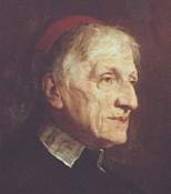
Saint Anselm of Canterbury


Although much scholarly discussion has centered around the writings of this brilliant theologian, the central characteristic of his life is often forgotten. Anselm was above all a man of intense prayer who placed his entire intellectual life in the hands of God like a child trusting in his father for guidance. He sought rational or logical arguments not because his mind was clouded with doubts but as a way of using his God-given mind to probe the foundations of the faith he already accepted, and to clarify what our language and concepts mean when adapted to mysteries above the domain of natural reason. The contemporary Catholic apologist should therefore learn his first lesson from Anselm’s very life, which wedded prayer and study, words and silence, wisdom and charity.

Anselm’s most important works, the Monologion, the Proslogion, and the Cur Deus homo, each deserves close study. The relevance of the Proslogion’s ontological argument for the existence of God—namely, that all men are capable of forming the concept “that than which no greater can be thought,” to which existence must belong if it is truly that than which no greater can be thought—is rather limited, for three reasons. First, later Western theologians, among them Saint Thomas Aquinas, found the proof defective. Second, a careful reading of the treatise as a whole shows that Anselm is seeking to deepen his grasp of a truth he already accepts in faith, making the argument a meditative response of reason to God’s self-revelation rather than a proof directed towards unbelievers. Finally, most modern people are not patient or schooled enough to follow Anselm’s abstract reasoning or would be tempted to dismiss it as playing with words. Yet the spirit of the treatise has an abiding relevance, and the prayers it contains help the reader to dwell within the luminous truth of God. Anselm’s Monologion, a profound exploration of the divine nature and the mystery of the Trinity, is more immediately useful to an apologist preparing to present or defend the existence of one God in three divine Persons. Anselm’s dialogue on the fittingness of the Incarnation, Cur Deus homo, contributes to an apologetic tradition stretching back to the earliest Fathers of the Church. The infinite holiness of God deserves perfect honor, but man, by sinning against God, has failed to render this honor; therefore God’s majesty is infinitely offended and man is infinitely guilty. If man is to be rescued from his plight, then this perfect honor must be given by him, canceling out his guilt and restoring his friendship with God; but God alone can restore what man has lost, and God alone can forgive the guilt of an infinite offense. Jesus Christ, Word made flesh, true God and true man, undertakes the work of redemption by offering Himself to the Father in an oblation of love on the Cross for the sake of mankind, an oblation fully acceptable to God because it is made by God; man is redeemed by man, the Father’s wrath is appeased and His mercy poured out, and the path to heaven is opened through Christ, the way, the truth, and the life.

Saint Anselm’s generous and positive attitude towards the integration of faith and reason is much needed now, as the encyclical Fides et Ratio repeatedly emphasized, and his humble way of “questioning God” is a model for the Christian thinker seeking to penetrate the mysteries of faith. Consider these words from chapter 2 of Cur Deus homo: “As the right order requires us to believe the deep things of Christian faith before we undertake to discuss them by reason, so to my mind it appears a neglect if, after we are established in the faith, we do not seek to understand what we believe.”

The Grandeur and Misery of Man

Blaise Pascal (1623–1662) was unquestionably one of the most eminent modern apologists for the Christian faith. Despite his poor health, Pascal was a prodigy in mathematics and science from his earliest youth. He performed ground-breaking experiments with water and air pressure, invented a calculating machine, and made striking advances in theoretical mathematics, especially probability theory. However, he came to see more and more that burgeoning empirical-mathematical knowledge could not satisfy yearnings for the ultimate meaning of life, nor could its technological counterpart deliver the earthly paradise it promised. Through his keen observations of people and their self-deceiving efforts to escape the unhappiness that lingers beneath the glitter of distracting pleasures, he became acutely aware of man’s radical need for God and the meaninglessness of life without faith. On November 23, 1654, Pascal underwent an intense spiritual experience, during which he wrote down some phrases on a piece of paper he later sewed into his jacket and always wore about with him:
God of Abraham, God of Isaac, God of Jacob, not of philosophers and scholars. God of Jesus Christ. He can only be found in the ways taught in the Gospel. Joy, joy, joy and tears of joy. This is life eternal, that they might know you, the only true God, and him whom you sent, Jesus Christ. I have cut myself off from him. I have fled from him, denied him, crucified him. Let me never be cut off from him. He can only be kept by the ways taught in the Gospel.3
After receiving this tremendous grace, he retired into seclusion, placed himself under the direction of spiritual advisors at the Port Royal monastery, and turned his attention to the practice of religion and the composition of apologetic works. The greatest of these is entitled Pensées, a collection of notes for a massive apologetic which Pascal did not live to complete. The notes he preserved, ranging in length from a few words to a few pages, contain some of the most profound insights into the heart of man ever written, and deserve to be read and pondered time and time again. He sketches arguments for the truth of the Christian faith and the divine authority of the Catholic Church from a variety of angles: experience of sin and error in the world, the futility of life without a final purpose, the inability of man to save himself from suffering and death, the incongruity between ideals and facts, proofs of natural reason, the correspondence of Old Testament prophecies to the Messiah who fulfills them, the compelling beauty of Jesus and his Covenant, the miracles performed by Christ and the saints throughout the ages. Warring against the rationalism that was starting to conquer European culture, Pascal emphasizes the primacy of the heart in search for God—that is, the centrality of will, conviction, submission—over cold intellectual arguments. “Reason’s last step is to recognize that there is an infinite number of things which surpass it. It is simply feeble if it does not go as far as realizing that.” “Reason would never submit unless it perceived that there are occasions when it should submit. It is right, therefore, that it should submit when it perceives that it ought to submit.”4


Blaise Pascal by Philippe de Champaigne

No apologist has so powerfully insisted on the truth of original sin and, in the face of it, the need for a Redeemer:
If man had never been corrupted, he would enjoy in his innocent state both truth and happiness with confidence. And if man had never been other than corrupted, he would have no notion of either truth or happiness. But in the wretched state in which we are . . . we have an idea of happiness and we cannot achieve it, we feel an image of truth and we possess only untruth. We are incapable both of total ignorance and certain knowledge, so obvious is it that we were once in a state of perfection from which we have unhappily fallen.5
And again:
Certainly nothing shocks us more deeply than this doctrine [of original sin]. Never­the­less without this most incomprehensible of all mysteries we are incomprehensible to ourselves. Within this gnarled chasm lie the twists and turns of our condition. So, humanity is more inconceivable without this mystery than this mystery is conceivable to humanity.6
“Not only is it through Jesus Christ alone that we know God but it is only through Jesus Christ that we know ourselves. We know life and death only through Jesus Christ. Without Jesus Christ we do not know what our life, nor our death, nor God, nor ourselves really are.”7 In the end, one who wants to be honest with himself must either believe in and submit wholly to God, accepting the Messiah whom the Father sent to redeem mankind, or be an atheist in despair, abandoning the search for truth and happiness, substituting in its place a routine of shallow diversions to mask the emptiness of a life poised for immanent death. “It is good to be weary and tired from the useless search for the true good, in order to stretch ones arms out to the Redeemer.”8

The most famous argument in the Pensées has been called Pascal’s Wager. If God exists and the Christian religion is true, then those who believe gain eternal life and those who do not believe earn eternal damnation. Since eternity is infinitely greater than the meager span of one’s life, one ought to wager on the truth of Christianity and embrace it. If it proves to be true, one gains everlasting life. If it proves to be false, then one has merely lost a short life that one had to lose anyhow. But if the religion is true, and one did not embrace it, one has lost infinitely more—one has lost everything. How could an infinitesimal fraction of time have any value in comparison with even the possibility of an eternity of bliss or woe? Here we see Pascal ingeniously using probability theory against the very agnosticism generated by the modern scientific mentality. This argument, like many others in Pascal, was intended to startle and provoke, so that an inquirer after religious truth would search all the more earnestly; it was not intended to be sufficient by itself or to supplant other classical arguments leading in the same direction.

In the later part of his life, Pascal became heatedly involved in political and ecclesiastical controversies surrounding the theology of Cornelius Jansen (1585-1638), Bishop of Ypres, whose interpretation of Saint Augustine’s doctrine of predestination, grace, and free will formed the basis of a heresy, or at least a heretical tendency, subsequently known as Jansenism. Although Pascal fiercely attacked the Jesuits of his time as traitors to Christianity and may have held some questionable theological positions associated with the Port Royal school, by the end of his life he had withdrawn from public controversy to spend his time in prayer, meditation, and works of charity. In the six-month period of his final prolonged sickness, Pascal sold off his carriage, horses, tapestries, furniture, silver, and most of his books, giving the money to the poor. In spite of his own physical sufferings, he earnestly requested those nursing him to go out and find a poor man who might be sheltered under the same roof with him. He died in peace of soul on August 19, 1662, shortly after receiving the last sacraments.

The Editions to Buy

As mentioned above, the major works by Saint Anselm fit snugly in a single volume. Two affordable paperback editions on the market contain almost exactly the same items in different translations: the Thomas Williams edition published by Hackett and the Brian Davies-Gillian Evans edition published by Oxford. While both translations are reliably faithful to the Latin originals and quite readable, on balance my preference goes to the Davies-Evans, for the simple reason that Williams insists on using inclusive language throughout in a way that uglifies the prose and needlessly complicates the theological points Anselm is making. In keeping with centuries of English usage and just plain good sense, Anselm’s famous question Cur Deus homo deserves to be rendered “Why God became man,” not “Why God became a human being.” Is anyone so witless as to think that “man” in this expression means only males of the species? And, more to the point, if anyone does think it, do they not need a lesson in grammar more than a clunky politically-correct translation?

With Pascal, however, the choices for an English Pensées are more numerous, and I can claim no expertise in recommending the best edition. I have always found the Penguin edition by Krailsheimer serviceable; the language is appropriately eloquent for a master controversialist like Pascal, and the content well-organized.9 One could likely find other good translations of this work as well.

A last piece of advice: skip the modern introductions to the volumes and go straight to the author’s own words. Without a doubt some introductions are interesting and helpful, especially for students doing research, but life is short, time is precious, and the wisdom we stand to gain is found in the primary sources, the original writings, of our great Catholic Tradition. Do yourself a favor and make time to read Pascal’s Pensées and, of Anselm’s works, at least Why God Became Man. A noble goal, faith seeking understanding, with two noble guides. May the gracious Lord, Father, Son, and Holy Spirit, grant each of us a consoling foretaste of His sovereign Reason as we walk through this vale of tears toward the light of glory.

Notes

  1. See Mt 12:43-45. [back]

  2. Rom 1:5, 16:26. [back]

  3. From Pascal’s “Memorial” of the event. [back]

  4. Nos. 220 and 205 in the Penguin edition. [back]

  5. No. 164. [back]

  6. Ibid. [back]

  7. No. 36. [back]

  8. No. 524. [back]

  9. Recall that Pascal’s original text is, in fact, a huge assembly of scattered notes, which gives rise to disputes about how best to arrange and present the material. [back]

[Dr. Peter A. Kwasniewski is Associate Professor of Theology and Philosophy at Wyoming Catholic College in Lander, Wyoming. The present article, "Two Great Apologists for the Catholic Faith," was originally published in Latin Mass: A Journal of Catholic Culture and Tradition, Vol. 18, No. 3 (Summer 2009), pp. 6-10, and is reprinted here by kind permission of Latin Mass Magazine, 391 E. Virginia Terrace, Santa Paula, CA 93060.]

Sunday, July 05, 2009

Substance, Accident, and Transubstantiation

by
Peter A. Kwasniewski


Abraham Bloemaert, Supper at Emmaus


The priest celebrating the traditional Roman Rite whispers in the midst of consecrating the Precious Blood: “mysterium fidei.” Indeed, the Real Presence of our Lord and Savior Jesus Christ in the Holy Eucharist is among the greatest mysteries of our faith. Over the millennia the Catholic Church has lovingly pondered this mystery, and her great theologians, while humbly acknowledging reason’s limits in probing what is divine and supernatural, have nevertheless been able to offer a reasoned defense of it against all objections that unbelief and heresy have hurled against it. In the modern world, where materialism, scientism, skepticism, and similar views reign supreme, the mysterious change that the Church calls “transubstantiation” has its mockers and would-be debunkers — even, sadly, conscientious or de facto dissenters within the ranks of the Church, such as the modernists who populate many a Catholic university, seminary, or chancery. As Catholics who seek to understand and live our faith more deeply, we need to make an effort to get hold of the common-sense philosophy of reality that provides the Church with the raw materials for her dogmatic definition of transubstantiation. If we do this, we stand a better chance of achieving clear (or in any case, clearer) thinking about this wondrous work of God and thus of being in a position to speak of it to others. In his encyclical Mysterium Fidei (1965), Pope Paul VI said, apropos the Magisterium’s use of philosophically refined language in formulating Eucharistic dogma:
These formulas [of the Council of Trent] — like the others that the Church used to propose the dogmas of faith — express concepts that are not tied to a certain specific form of human culture, or to a certain level of scientific progress, or to one or another theological school. Instead they set forth what the human mind grasps of reality through necessary and universal experience and what it expresses in apt and exact words, whether it be in ordinary or more refined language. For this reason, these formulas are adapted to all men of all times and all places. (§24)
This article will attempt to show just what the Church’s formulas mean and how the mystery, while never ceasing to be a marvel and a miracle past all human thought, can nonetheless be clarified to the mind so that it no longer seems a colossal contradiction or impossibility. In short, we offer to the reader a modest essay in what the Father of Scholasticism, St. Anselm, called “faith seeking understanding.”

A Short Philosophical Primer

As the distinction between “substance” and “accident” is fundamental to the Church’s teaching on transubstantiation, anyone seeking a deeper understanding of the Sacred Mysteries will do well to spend a little time on what exactly these terms refer to.  The following short primer is intended to serve the purpose.

The distinction between substance and accident, in spite of the technical sound of the terms, is founded upon our everyday experience. While modern usage often restricts the meaning of “substance” to elements or chemicals and “accident” to an unintended and usually harmful event, their philosophical meaning is much wider. The word “substance” refers to any individual being, anything that exists in and of itself, e.g., a man, a horse, a plant, a stone, having its own proper nature (in contrast to a bench, for example, which, though it has a definition, does not have its own proper nature but is the result of art putting together different natural substances). The term “substance” derives from its function: it is “that which stands under” (Lt. substantia, Gk. hypostasis), in contrast to the “accidental” (Lt. accidens, Gk. katasymbebekos), “that which befalls, happens to, belongs to” substance. A substance exists in itself as opposed to what exists in a substance. Color, shape, weight, knowledge, virtue, fatherhood, sonship are examples of things that exist in a substance and not in themselves. Color, shape, and weight truly exist, but they exist as belonging to something which is colored, shaped, or heavy. We never see whiteness, but rather, a white horse or a white chair; we never see justice, but rather, a just man or a just law.1 When we say that someone is six feet tall, we mean that his size is a quantity of his substance; he is six feet tall. Fatherhood is not something that exists apart from someone who is a father; “being a father” belongs to one person in relation to another. Knowledge has existence only in the mind of him who possesses it; it is an accident inhering in his soul.


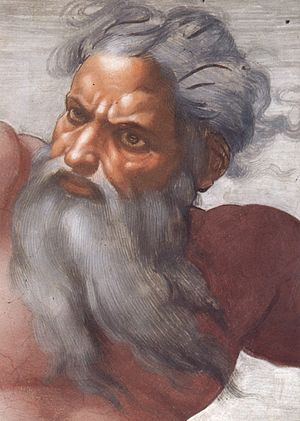
Creation of the Sun and Moon by Michelangelo

Things which are accidents in the soul of a rational creature (such as its knowledge and virtues), are, in God, identical with
His very being.


There are two kinds of accidents: accidents generally so called (non-proper accidents), and proper accidents (“properties”). Non-proper accidents can come to be and pass away in the same substance, as a pale man can become dark by tanning, or an unmusical man can become musical by study, and through lack of practice can lose this knowledge. A proper accident, on the other hand, is rooted in and flows from the very nature of a substance, so that it is always present when the substance is present, e.g., the ability to laugh or the ability to speak, which flow from man’s rational nature. These are called accidents because they only exist in a substance, but they are called properties because they are proper to a certain kind of substance and always accompany it. It would be wrong, therefore, to define accident as that which can either be or not be; some accidents are permanent, others mutable. The important notion in defining accident is that it exists in, or inheres in, an underlying subject. (The single exception is the mystery of the Eucharist, where, by divine power, the accidents of bread and wine exist without an underlying subject, as we shall discuss below.) Accidents are thus always distinct from substance, which is their source of being. If there were no rational animal, there would be no foundation for the properties of speech and laughter or the accidents of tall, brave, musical, etc.2

Because we gain our knowledge of reality through our senses, we can directly perceive only the accidental features of things. Nevertheless, the existence of substance is readily inferred from our experience of individual beings (this man, this horse) and from the impossibility of an abstract quality (whiteness, musicality, justice, six-footedness) existing apart from a subject or individual modified by it. The accidents we perceive point to a more fundamental level of being which enables them to exist. A person can change color or height, can acquire or lose virtue, without ceasing to be the same person; substance is the permanent principle underlying all other characteristics. This leads us to a broader meaning of substance: that which truly is, the essential foundation, as opposed to what is mutable or derivative. In this sense the very nature or essence of a thing is sometimes called its substance, because the nature or essence is that which makes a thing to be what it is; and by extension, the being of a thing can be called substance. When “substance” is used in these extended senses, it no longer signifies a counterpart to or foundation of accidents; hence when God is called a substance, or the Persons of the Trinity are referred to as hypostases, or when we speak of the hypostatic union of the human and divine natures in Jesus Christ, we do not imply that there are corresponding accidents inhering in the being of God or the Word. Things which are accidents in the soul of a rational creature (such as its knowledge and virtues) are, in God, identical with His very being.

The term “substance” entered into Christian theology very early on, in controversies surrounding the Incarnation and the Blessed Trinity. The Council of Nicea (325), defending the divinity of Christ, speaks of the Son as homoousian (Lt. consubstantialis), that is, of the same substance, the same divine essence, against the Arians who called Him homoiousian, “of a like substance.”3 In the Middle Ages, when the mystery of the Eucharist as the real Body and Blood of Christ was challenged by Berengarius of Tours, the vocabulary of substance and accident was employed to formulate the orthodox teaching.

The Miracle of Transubstantiation

As the central mystery of our faith, “the source and summit of the Christian life,” the Holy Eucharist is the object of the Church’s most profound adoration and most rigorous vigilance.4 To understand why the Church uses the term “transubstantiation” for the miracle that occurs at the moment of consecration, two truths are presupposed: first, that the Eucharist really is the Body and Blood of Christ, and second, as a necessary counterpart, that bread and wine really change into the Body and Blood. Both truths are taught in Scripture5 and unequivocally attested to by the Eastern and Western Fathers of the Church. Greek authors refer to the change that takes place in the gifts as a metousiosis or change of one being (ousia) into another; to this day, Eastern Orthodox theologians who remain faithful to the Patristic heritage are fundamentally in agreement with Catholic dogma, even if they use a different and less precise terminology.6 The Latin term transubstantiatio appeared in the late 11th century and was set forth authoritatively at the Fourth Lateran Council (1215). Opposing the Eucharistic heresies of the self-styled Reformers, the Council of Trent (1545–63) solemnly restated the doctrine, noting that its meaning, if not the special term, has been the common faith of the Church always and everywhere.

One must marvel at the beautiful fittingness of the means chosen by our Lord: bread and wine are evident sources of nourishment for the body, thus perfectly symbolizing the spiritual nourishment the soul receives in Holy Communion.

The substance of a thing is what it most fundamentally is as a certain kind of thing (e.g., bread is a product of baked flour, oil, salt, etc.), as distinguished from its various accidents or characteristics (color, taste, smell, shape, size, location, and the like).7 Normally, the accidents of a thing indicate its substance; the color and taste of bread lead us to make the unsurprising inference that it is bread. Transubstantiation is rightly called miraculous, that is, altogether outside of the ordinary course of nature, because in this mysterious conversion the accidents or characteristics of bread and wine continue to remain while the inner substance, the essential reality, comes to be entirely different. As the Council of Trent teaches, at the moment of consecration, in virtue of the efficacious words of our Lord uttered by His minister, the entire substance of bread is changed into the entire substance of the Body of Christ and the entire substance of wine is changed into the entire substance of the Blood of Christ. Bread and wine as such cease to exist and the full reality of Christ comes to be present under their appearances, which by remaining permit us to consume the divine gifts. The accidents of bread and wine thus remain without any substance in which they inhere, and the substance of Jesus Christ becomes present without any of His sensible accidents or characteristics. One must marvel at the beautiful fittingness of the means chosen by our Lord: bread and wine are evident sources of nourishment for the body, thus perfectly symbolizing the spiritual nourishment the soul receives in Holy Communion, and the lingering accidents of these foods permit the communicant to receive the true flesh and blood of the Lord, and thus His soul and divinity, unbloodily, in a manner well suited to us and our powers. When we receive Holy Communion, the Lord of heaven and earth comes to dwell within us in the most intimate way, blessing our souls and bodies with the infinite holiness of His divinized humanity. While the human body transforms ordinary food into its own substance, in receiving Christ worthily it is we who, bathed in His grace, are transformed by degree into His image and likeness.

Transubstantiation is rightly called miraculous, that is, altogether outside of the ordinary course of nature, because in this mysterious conversion the accidents or characteristics of bread and wine continue to remain while the inner substance, the essential reality, comes to be entirely different.

Because through the words of consecration the Body and Blood of Our Lord come to be present in all their truth, as the living flesh and blood of the risen Lord in heaven, the consecrated host necessarily also contains — “by concomitance,” to use the language of Saint Thomas and the Council of Trent — His Blood, Soul, and Divinity, for the latter are inseparable from the former.8 They always accompany the Body (the verb concomitare simply meaning to attend, accompany, go along with). The same is true in regard to the wine, which is made the Blood of Christ by virtue of the words of consecration, but in which is present by concomitance the Savior’s Body, Soul, and Divinity. This is the reason why reception under one species, whether that of bread or that of wine, does not in any way lessen one’s reception of the whole Christ, the Word made flesh, even if the signification or sign-value of the sacrament is more fully acknowledged and embraced by reception under both species, as befits above all the priest who offers the sacrifice.

Objections and Replies

Some have objected that the use of “substance and accident” in defining the mystery of the Eucharist makes an illegitimate use of pagan philosophical categories which are not revealed in Scripture or found explicitly prior to the scholastic thinkers of the Middle Ages. In her efforts to defend this holiest of mysteries, the Church, so it is said, tied herself to debatable human distinctions instead of remaining content with a simple act of faith in the Presence of Christ. One might initially reply that the terms Incarnation and Trinity are also not mentioned in Scripture, but are no less true on that account. But more to the point, this objection fails to see that the distinction between substance and accident is firmly rooted in common experience and the very structure of reality. The Church uses philosophical terminology whenever it captures some undeniable truth about the world we live in or the faith we profess. Even if the Church does not enjoin Aristotelian physics per se, she perceives that the mystery of the Eucharist can be correctly defined in terms originally introduced by Aristotle. Although she encourages further theological reflection on the sacred mysteries, the Church has solemnly defined that the wondrous and singular change occurring at the moment of consecration is most appropriately and correctly called transubstantiation. Responding to the Synod of Pistoia (1786) which held that the theory of transubstantiation is a “purely scholastic question,” Pope Pius VI reaffirmed to the contrary that all of the faithful should be instructed in it. Pope Paul VI’s encyclical Mysterium Fidei (1965) issued a stern warning against devaluing or replacing the term “transubstantiation,” condemning in particular two innovations, “transfinalization” (namely, that the words of consecration change the finality or purpose of the bread and wine, which then serve the function of stimulating faith in Christ’s love) and “transignification” (that the words of consecration change the meaning of the bread and wine, which thus acquire a symbolic significance lacking in ordinary human food). Such theories hearken back to the errors of Protestant Reformers who either denied the actual conversion of bread and wine into the Body and Blood of Christ and consequently rejected the Real Presence, or denied the total conversion of the gifts, insisting that after consecration the bread and wine continue to remain, together with or alongside of the newly-present Body and Blood (a theory known as consubstantiation). It was precisely such heresies that the Council of Trent anathematized in order to safeguard the profoundest mystery of divine love. When she rejects consubstantiation, moreover, the Church is in fact upholding reason; for to say that the very same thing is both the entire substance of Christ and the entire substance of bread is a contradiction in terms, a metaphysical impossibility.

When she rejects consubstantiation, moreover, the Church is in fact upholding reason; for to say that the very same thing is both the entire substance of Christ and the entire substance of bread is a contradiction in terms, a metaphysical impossibility.

Catholics should be aware of other objections that may be directed against the mystery of transubstantiation. First, it might be thought that God is “deceiving” us if Jesus Christ is truly present but cannot be perceived in any way as present; why would the Savior choose to give Himself to us under different and misleading appearances? The practical answer is that, granting our Lord’s intention to nourish us with Himself, we could not eat His Body and drink His Blood in a dignified way unless it were made available after the manner of ordinary food and drink. But the deeper answer is that the Eucharist, as the supreme mystery of faith, beckons us to place our entire trust in the infallible word of God, the God of mercy who condescended to enter the world as a helpless infant whose divinity could not be recognized by human senses (John 1:9-13, Matthew 16:17). The hidden presence of Christ upon the altar is at once the greatest mercy to sinners (Matthew 26:28) and the greatest challenge to disciples, who must discern Christ in the breaking of the bread (Luke 24:35) or they shall find Him nowhere, even were He to appear and walk alongside them. If we must exercise the supernatural virtue of faith to accept all the mysteries of our holy religion — the Trinity, the Incarnation, the virgin birth, the resurrection — we must exercise this virtue above all when worshiping and approaching the God hidden under the humble appearances of the consecrated gifts. Our Lord said to Thomas: “Blessed are they who have not seen and yet believe” that I am truly risen from the dead (John 20:29); to us at every Mass He says: “Blessed are you who do not see and yet believe” that I am truly here, in your midst, fulfilling my promise to be “with you always even to the end of time” (Matthew 28:20).

A philosophically-minded person could object that a substance cannot change without its accidents or appearances also changing; thus if bread and wine cease to be, their appearance must also cease, and if Jesus comes to be present, His appearance must also come to be present. In replying, one should note that God is able, in His omnipotence, to cause a substance to exist by itself without its usual sensible characteristics, and to sustain accidents in being apart from their customary subject, because He is the first and absolute cause of all being — the being of substances as well as of their accidents — and whatever is the first and absolute cause of a composite is also the cause of its aspects or components taken one by one. Thus the Creator who causes both iron and its accidents (shiny surface, hardness, durability) to exist and remain in existence, can, if He chooses, cause the characteristics of iron to remain while withdrawing the substance underlying them. That He can do so should not be difficult to accept when we consider that God, in creating the world, the angels, and each human soul, brings forth being out of nothing (ex nihilo) — an act which surpasses every miracle. The objection is valid only so far as our common experience goes, for the Eucharist is an absolute exception. With all other beings it is true that substance and accidents always go together, but in the mystery of the Blessed Sacrament God has willed that they remain separate by an act of His indomitable power.

Related to this objection is another: how can the Body of Christ be in more than one place at a time? Would not Christ be impossibly multiplied in the many hosts? In response: only the accidents of bread and wine are divided up and distributed, and only the accidents can perish with time, as they do in the stomach of the recipient; the glorified Savior in heaven, without suffering division, makes Himself wholly present in the Eucharist, which is truly one because its substance is truly one. St. Paul’s teaching — “The bread which we break, is it not a sharing in the Body of Christ? Because there is one bread, we who are many are one body, for we all partake of the one bread” (1 Corinthians 10:16-17) — shows that one and the same Bread of Life, Jesus Himself (John 6:35), is received by Christians under the appearances of that physical bread which can be broken up and given out. Though the comparison limps, even a mere man can be present at the same time in different places according to different modes: on a telephone conference call, a speaker is present to himself in one way and present to the others in another way, without ceasing to be the same man. In the Holy Eucharist, our Lord is present in a sacramental mode which permits of multipresence or multilocation.


The Nativity by John Singleton Copley

The Eucharist, as the supreme mystery of faith, beckons us to place our entire trust in the infallible word of God, the God of mercy who condescended to enter the world as a helpless infant whose divinity could not be recognized by human senses.

Finally, some people think that the doctrine of transubstantiation is made untenable by “modern science.” The empirical sciences of recent centuries, however, have done no more than provide a vast amount of detailed information and numerous interesting theories about the very same world in which the ancients and medievals lived, the same world all of us live in and experience. There can never be any reasonable dispute about the normal sequence of events and the ordinary constitution of substances in the natural world. Just as the believer who eats the host tastes bread but knows by faith that he receives Jesus Christ, chemical analysis performed on a consecrated host (God forbid) would obviously indicate the accidental features of bread — just as the believer has always known. Neither the five senses of man nor the most advanced instruments of empirical science can reach into the inward substance of things; all they can know and register are the accidents, the appearances, the qualities and quantities, which, in the Eucharist, remain what they were before transubstantiation. The hostility that a modern empiricist might aim at the Eucharist is rooted in a prior axiomatic rejection of the existence of God or of the very possibility of miracles, i.e., events outside the ordinary “law-abiding” course of nature. These are errors to be engaged on a larger battlefield. Once the existence of God and the infinite perfections of His nature are demonstrated, it becomes impossible to deny the possibility of miracles, since the God who creates and sustains all things can do as He wishes with them; and because Jesus Christ is true God, it immediately follows that He can perform the miracle of transubstantiation by the infinite power of His divinity, a power to which the priest is given special access through his sacramental conformity to Christ the High Priest.

Notes

  1. An idiom like "Will we ever see justice?" means: Will we see the just thing done in this situation? [back]

  2. There are also two levels of substance. Primary substance is what we have been speaking of, the individual existing thing, this particular man or horse or tree. Secondary substance refers to the genus or species of an individual. "Animal" or "plant" may be called substance, but since there are only individual animals and plants in the world, substance most properly refers to actually existing things rather than their species or genera. [back]

  3. The expression "It doesn't matter one iota" is a rationalist snub against the theological precision of our forefathers. One iota makes all the difference between Christianity and the dressed-up paganism of Arius. [back]

  4. See Lumen Gentium 11, Catechism of the Catholic Church 1324. That this adoration and vigilance have often been lacking, especially in recent decades, can hardly be blamed on official teaching. It results more from the decay in authority, the lack of effective discipline, and the gradual loss of a sense of Tradition among the faithful, as documented in Romano Amerio's Iota Unum [back]

  5. See, inter alia, John 6:48-60; Matthew 26:26-28, Mark 14:22-24, Luke 22:19-20; 1 Corinthians 10:16-17, 11:23-29. [back]

  6. They see their linguistic reserve as a great virtue, of course, but this is no place to enter into a debate about why they are mistaken. [back]

  7. While bread is not a substance produced by nature but rather a mixture of natural ingredients brought together by man and subjected to heating, the end result is not a mere conglomeration of ingredients, unless the baking has been quite unsuccessful; it is a constantly recognizable something to which we have no difficulty assigning a single name. [back]

  8. Inseparable now that Christ is risen and death holds no dominion over Him. The humanity we receive in the Eucharist is risen, glorified, whole and imperishable. When Jesus first celebrated the Eucharist on Holy Thursday, the humanity received by the disciples was passible (able to suffer). Saint Thomas goes so far as to say that if the Eucharist had been offered during the interval between Christ's death and resurrection, the host would have contained the Body with the Divinity but without the Blood or the Soul, and the chalice would have contained the Blood with the Divinity but without the Body or the Soul. All this is simply the rigorous application of the principle that the Eucharist contains the substance of Christ as He is. [back]

[Dr. Peter A. Kwasniewski is Associate Professor of Theology and Philosophy at Wyoming Catholic College in Lander, Wyoming. The present article, "Substance, Accident, and Transubstantiation," was originally published in Latin Mass: A Journal of Catholic Culture and Tradition, Vo. 18, No. 1 (Spring 2009), pp. 8-13, and is reprinted here by permission of Latin Mass Magazine, 391 E. Virginia Terrace, Santa Paula, CA 93060.]